
Building Sustainable Fitness Habits That Actually Stick
Let’s be real—you’ve probably started a fitness routine before. Maybe you crushed it for two weeks, felt amazing, then life happened and suddenly you’re back on the couch wondering where your motivation went. You’re not alone. The difference between people who transform their fitness and those who don’t isn’t usually genetics or willpower. It’s habits.
The truth is, sustainable fitness isn’t about finding the perfect workout or the strictest diet. It’s about building a system that works with your life, not against it. When you focus on creating habits instead of chasing quick results, something shifts. You stop white-knuckling your way through workouts and start actually enjoying movement. Your body changes not because you’re suffering, but because consistency becomes automatic.
In this guide, we’re breaking down exactly how to build fitness habits that last—the ones that become so woven into your daily life that skipping them feels weird, not like deprivation.
The Foundation: Why Habits Beat Willpower Every Single Time
Here’s what most people get wrong: they think fitness success is about having more willpower than everyone else. It’s not. Willpower is a finite resource that depletes throughout the day. By the time you get home from work, deal with family stuff, and handle stress, your willpower tank is running on fumes. That’s why relying on motivation or discipline alone is a losing game.
Habits, on the other hand, are automatic. They don’t require willpower because they’re encoded in your brain as patterns. When you brush your teeth before bed, you don’t need motivation—it’s just what you do. The goal is to make fitness the same way.
According to research from the National Institutes of Health on habit formation, it takes an average of 66 days to build an automatic habit, though this varies based on complexity and individual differences. The key insight? Start with something so simple that your brain doesn’t even question it. When you’re starting a new workout routine, this principle becomes your secret weapon.
The habit loop works like this: cue (something triggers you) → routine (the behavior you do) → reward (the benefit you feel). Your job is to design each component intentionally. If your cue is “put on workout clothes after breakfast,” your routine is “20-minute walk,” and your reward is “feel energized for the day,” you’ve created a sustainable loop.
Start Stupidly Small (Seriously, We Mean It)
This is where most people sabotage themselves. They get inspired, commit to working out five days a week, doing meal prep on Sundays, and completely overhauling their life. By week two, they’re burned out and back to square one.
Instead, think microscopically. Your first habit doesn’t need to be impressive. It needs to be doable even on your worst day. That might mean:
- A 10-minute walk three times a week (not an hour at the gym)
- Drinking one extra glass of water daily (not overhauling your entire diet)
- One strength training session weekly (not five days of CrossFit)
- Doing five pushups after your morning coffee (not a full upper body workout)
The magic happens when you consistently hit these small targets. Your brain starts to believe you’re “the kind of person” who works out. That identity shift is more powerful than any external reward. When you understand how to incorporate strength training into your routine, starting small doesn’t mean starting weak—it means starting smart.
Once your first habit is genuinely automatic (you’re not thinking about it anymore), you layer in the next one. Maybe that’s adding a second walk, or committing to protein at each meal. The compound effect of multiple small habits is where real transformation happens.
Design Your Environment for Success
You’re not as in control of your choices as you think. Your environment shapes your behavior more than you realize. If you want to build fitness habits, you need to design your surroundings to make the right choice the easy choice.
Practical examples:
- Prep your gym bag the night before. It sits by your door as a visual cue. You’re more likely to grab it.
- Keep workout clothes visible. Not in a drawer—on a chair or in your closet at eye level.
- Put your phone in another room during workouts. Removes the temptation to scroll.
- Stock your kitchen with foods you actually enjoy eating. Not what you think you “should” eat, but what you’ll genuinely consume.
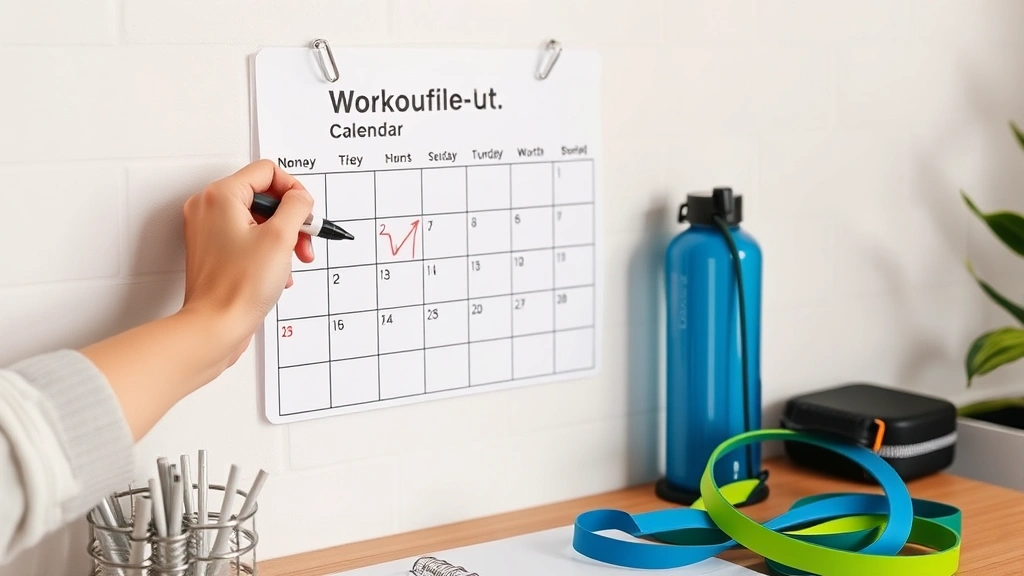
- Schedule workouts like appointments. Block time on your calendar so other commitments don’t creep in.
If you’re looking to optimize your approach, understanding how to structure your weekly workout plan works hand-in-hand with environmental design. When your schedule is clear and your space supports your goals, friction disappears.
The Mayo Clinic’s fitness guidelines emphasize that successful people remove barriers to exercise. Your environment is the biggest barrier or asset you control.
The Consistency Game
Consistency beats intensity. Always. Someone who does 20 minutes of walking five days a week for a year will see more progress than someone who does intense workouts sporadically.
Here’s the thing about consistency: it’s not about being perfect. It’s about showing up regularly, even when it’s not convenient. Some of your workouts will be amazing. Others will feel mediocre. Both count. Both build the habit.
The “never miss twice” rule is powerful here. Missing one workout? Life happens. Missing two? You’re starting to build a new (bad) habit. This doesn’t mean you never take rest days—active recovery and true rest are essential. It means you maintain the structure even if you modify the intensity.
When you’re thinking about progressive overload in your training, consistency is the foundation everything else is built on. You can’t progress if you’re not showing up consistently.
Track your consistency rate. Aim for 80-90% adherence, not 100%. This is realistic, sustainable, and leaves room for life. If you hit 80% of your planned workouts, you’re in the top percentile of people actually changing their bodies and health.
Track What Matters
You don’t need to track everything. In fact, tracking too much becomes overwhelming and kills motivation. But tracking something gives you feedback and proof that your habits are working.
What to track depends on your goals, but consider:
- Workout completion: Did you do it or not? Simple yes/no.
- How you felt: Energy level, mood, sleep quality. These are early wins before body composition changes.
- Performance metrics: Reps, distance, time. These show progress when the scale doesn’t move.
- Consistency rate: What percentage of planned workouts did you complete?
Use whatever system works for you—a calendar where you mark off completed workouts, a notes app, or a fitness app. The best tracking system is the one you’ll actually use. When you understand the principles of measuring fitness progress beyond the scale, you’ll appreciate how multi-dimensional success really is.
Review your tracking weekly. Celebrate the wins, however small. “I completed four out of five planned workouts” is a win worth acknowledging. This positive reinforcement strengthens the habit loop.
Find Your People
Humans are social creatures. Trying to build fitness habits in isolation is harder than it needs to be. Whether it’s a workout buddy, an online community, or a group fitness class, having people around your goals dramatically increases your success rate.
This doesn’t mean you need an expensive gym membership or a personal trainer (though those can help). It could be:
- A friend who texts you accountability check-ins
- An online community focused on your specific goal
- A free group fitness class at your local community center
- A walking group that meets three times a week
- A friend who wants to build habits too, so you check in together
Research from the American College of Sports Medicine consistently shows that social support increases adherence to exercise programs. You’re literally more likely to stick with your habits when other people are involved.
The accountability piece matters, but so does the normalization. When fitness is something your people do, it becomes normal for you too. You’re not the weird one trying to change—you’re just part of the group.
Navigate the Obstacles (Because They’re Coming)
Building sustainable habits isn’t a straight line. You’ll hit obstacles. Knowing this in advance means you won’t be blindsided.
Common obstacles and how to handle them:
“I don’t have time.” You have the same 24 hours as everyone else. The real issue is usually priority. Can you wake up 20 minutes earlier? Work out during lunch? Ask your family for 30 minutes of uninterrupted time? When something matters, you make space for it.
“I’m too sore/tired.” Soreness decreases as you build the habit. If you’re genuinely exhausted, that’s feedback to assess your sleep, stress, or workout intensity. Rest when needed, but don’t confuse rest days with skipping your habit entirely.
“I’m not seeing results fast enough.” Habits take time. Body composition changes take 4-8 weeks to become visible, but you’ll feel energy and mood shifts much sooner. Celebrate those early wins while you wait for physical changes.
“Something came up and I missed a week.” This happens. The key is getting back immediately. Don’t wait until Monday or the start of next month. Your next scheduled workout is your restart point.
Understanding how to overcome common fitness plateaus helps you navigate the mental and physical obstacles that arise. They’re not failures—they’re part of the process.

” alt=”Woman in athletic wear doing stretching exercise outdoors in morning sunlight, surrounded by trees”>
The Psychology of Habit Stacking
One advanced technique that makes habits stick even harder is habit stacking. This means attaching your new habit to an existing habit that’s already automatic.
Examples:
- “After I pour my morning coffee, I do 10 pushups.”
- “After I change into work clothes, I take a 15-minute walk.”
- “After I eat dinner, I do 20 minutes of stretching.”
The existing habit becomes the cue for your new habit. This is incredibly powerful because you’re leveraging habits you’ve already built. Your brain doesn’t have to remember to start something new—it just follows the chain.
When you’re planning how to build a sustainable fitness routine, habit stacking is one of the most underrated strategies. It reduces decision fatigue and makes the new behavior feel like an automatic extension of something you already do.
Real Talk: Motivation Will Fade, and That’s Okay
The initial excitement of starting a fitness journey is real. You feel pumped, energized, ready to change your life. Then about three weeks in, that feeling fades. You don’t wake up as excited. Your body’s adjusted to the soreness. The novelty is gone.
This is actually the most important moment. This is when you find out if you’ve actually built a habit or if you were just riding motivation. If you’ve done everything right—started small, designed your environment, found your people, and tracked progress—the habit carries you through this phase. You don’t need motivation because it’s just what you do.
Habits don’t feel exciting. They feel normal. And that’s exactly the point.
” alt=”Group of diverse people of various ages jogging together in a park on a sunny day, smiling”>
FAQ
How long does it really take to build a fitness habit?
The research suggests 66 days on average, but this varies. Simple habits (like a daily walk) might take 4-6 weeks. Complex ones (like a full workout routine) might take 8-12 weeks. The timeline matters less than consistency. Focus on showing up, and the habit will develop.
What if I miss a workout?
Missing one workout isn’t a failure. It’s only a problem if it becomes two or three. Get back to your next scheduled workout without guilt. The goal is 80-90% adherence, not perfection.
Should I change my habit if it’s not working?
Give it at least 3-4 weeks before deciding it’s not working. Your brain needs time to adapt. If after a month it genuinely doesn’t fit your life, adjust the timing or type of exercise—but keep the habit itself. Swap a morning walk for an evening walk, not “I’ll just quit moving.”
Can I build multiple fitness habits at once?
Not recommended when you’re starting. Build one habit until it’s automatic (4-8 weeks), then layer in the next. Trying to change everything simultaneously is why most people fail. Sequential change beats simultaneous change every time.
What if my goal is weight loss?
Fitness habits are the foundation, but weight loss also involves nutrition. Start with the fitness habit first, then layer in nutrition habits once the exercise routine is solid. The combination is powerful, but you can’t out-exercise a poor diet. Both matter, but build one at a time.
Is a gym membership necessary?
Not at all. Walking, bodyweight exercises, running, cycling, and home workouts are all legitimate. Choose whatever you’ll actually do consistently. A $60 gym membership you don’t use is worse than free walks you do daily.
Building sustainable fitness habits isn’t complicated, but it does require intentionality. Start small, design your environment, find your people, track your progress, and trust the process. The transformation that comes from consistent habits over months and years is the kind that actually lasts. You’ve got this.


