
How to Build Muscle Without Going to the Gym: Your Complete Home Workout Guide
Look, I get it. The gym isn’t for everyone. Maybe you’re intimidated by the crowds, you don’t have time to commute, or you’re just more comfortable working out at home. Here’s the truth: you absolutely can build serious muscle without ever stepping foot in a commercial gym. I’ve seen people transform their bodies using nothing but bodyweight exercises, resistance bands, and a little creativity. The secret isn’t fancy equipment or an Instagram-worthy home gym—it’s consistency, progressive overload, and understanding how your muscles actually grow.
Building muscle is fundamentally about creating tension on your muscles and giving them a reason to adapt and grow stronger. Whether that tension comes from a barbell or your own bodyweight doesn’t matter nearly as much as the work you put in. In this guide, I’m going to walk you through everything you need to know to build muscle at home, including the science behind muscle growth, practical exercises you can start today, and how to progress without getting bored or plateauing.
Understanding Muscle Growth at Home
Before we dive into exercises, let’s talk about how muscle actually grows. Your muscles don’t grow in the gym—they grow during recovery. When you exercise, you create micro-tears in muscle fibers. Your body then repairs these tears and adapts by building them back slightly bigger and stronger. This process is called hypertrophy, and it happens whether you’re lifting heavy weights or doing push-ups in your living room.
The key variables that drive muscle growth are tension, metabolic stress, and muscle damage. You need to challenge your muscles consistently, and you need to eat enough protein to support growth. The good news? You can create all three of these stimulus types at home. Progressive overload—gradually increasing the demands on your muscles—is your best friend whether you’re training at home or in a commercial gym.
According to the American College of Sports Medicine, resistance training two to three times per week is sufficient to build muscle, regardless of the setting. That means you don’t need expensive equipment or hours at the gym. You need a solid plan and the discipline to stick with it.
Essential Equipment You Actually Need
Here’s where I’m going to be honest with you: you can build muscle with zero equipment. Bodyweight exercises work incredibly well. That said, a few pieces of affordable gear can dramatically expand your options and make progression easier. Think of these as optional upgrades, not necessities.
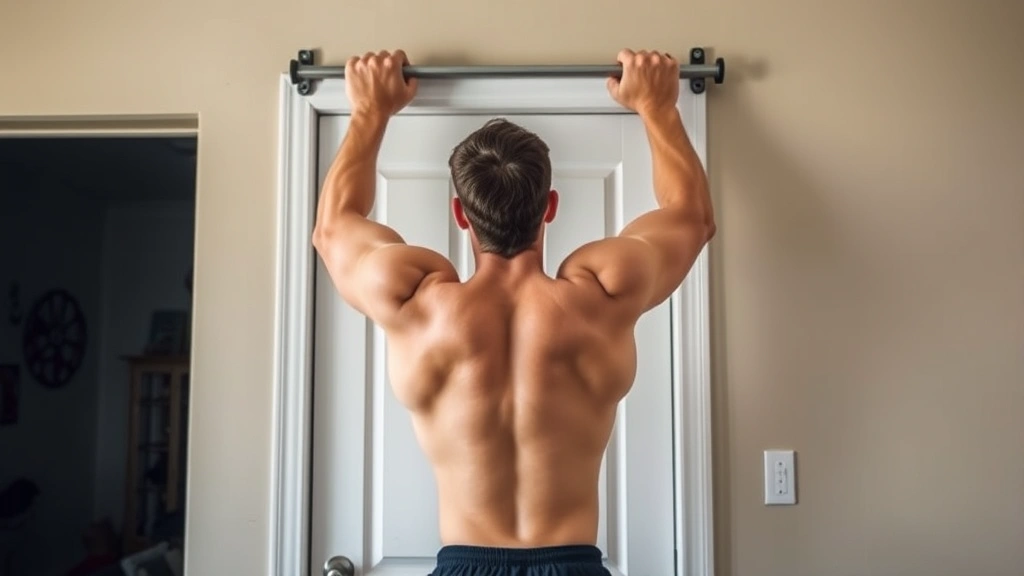
Resistance bands are my top recommendation for home training. They’re cheap, portable, and provide progressive resistance. Unlike weights where you only get harder at the bottom of a movement, bands get harder as you stretch them, which creates constant tension throughout the range of motion. Adjustable dumbbells are the next step up if you have space and budget. They let you add external load and are more intuitive than bands for many movements. A pull-up bar that fits in a doorway opens up pull-ups and chin-ups, which are absolute game-changers for back and arm development.
Optional but nice to have: a weight bench (even a basic one), suspension trainer like TRX, or a stability ball. Honestly? Start with your bodyweight and bands. You can build an impressive physique with just those two things.
Best Bodyweight Exercises for Muscle Building
Let’s get into the actual exercises. These are the movements that’ll form the foundation of your home training. Focus on quality over quantity—better to do five perfect push-ups than twenty sloppy ones.
Push-ups are the king of chest, shoulder, and tricep development. Don’t underestimate them. Standard push-ups, incline push-ups (hands elevated), decline push-ups (feet elevated), and archer push-ups all provide different stimulus. Squats work your quads, glutes, and core. Add pauses at the bottom, jump squats, or single-leg variations to increase difficulty. Lunges target legs unilaterally and are fantastic for addressing muscle imbalances.
For your back, pull-ups and chin-ups are unbeatable if you have a bar. If not, inverted rows under a sturdy table work surprisingly well. Dips using a chair or bench hammer your chest and triceps. Planks and hollow body holds strengthen your core, which matters more than people realize for overall strength and aesthetics.
Don’t forget about single-leg glute bridges and step-ups for posterior chain development. Your glutes are one of the largest muscle groups in your body, and they respond incredibly well to training. Check out our guide on glute-focused training for more specialized options.

Progressive Overload Without a Gym
Progressive overload is the principle that you must continually increase the demands on your muscles to keep growing. At the gym, it’s simple: add more weight. At home, you need to get creative, but it’s absolutely doable.
Add volume: Do more sets or reps. If you’re doing three sets of ten push-ups, aim for three sets of twelve next week. This is the easiest form of progression and works great for building muscle.Increase time under tension: Slow down your movements. A three-second descent on a push-up creates more muscle damage and metabolic stress than a one-second drop. Try tempo training where you count out each phase of the movement.Decrease rest periods: Shorter rest between sets increases metabolic stress and cardiovascular challenge. Drop from 90 seconds to 60 seconds between sets as you get stronger.Add external load: Use resistance bands, fill a backpack with books, wear a weighted vest, or hold dumbbells. Even modest external load dramatically increases difficulty.Modify leverage: Single-leg squats are harder than two-leg squats. Archer push-ups are harder than standard push-ups. Diamond push-ups are harder than wide push-ups. These variations let you progress without equipment.
Combining these methods is your secret weapon. You might do four sets of push-ups with a two-second pause, shorter rest periods, and hands slightly elevated to increase range of motion. That’s progressive overload without adding a single pound of external weight.
Research from the National Academy of Sports Medicine shows that progressive overload is the primary driver of strength and muscle gains, regardless of the training modality. Your job is to find ways to make the work harder over time.
Home Workout Programming
Now let’s talk about putting this all together into an actual program. The best program is one you’ll actually follow, so keep it simple.
Full-Body Training (3 days per week): This is my top recommendation for home training. Train three non-consecutive days per week (Monday, Wednesday, Friday works great). Each session includes pushing movements (push-ups, dips), pulling movements (if you have a bar), lower body (squats, lunges), and core work. Full-body training allows you to hit each muscle group multiple times per week, which is optimal for muscle growth. Recovery is easier, and it’s hard to get bored because you’re doing varied movements.
Upper/Lower Split (4 days per week): If you want more volume, train upper body twice and lower body twice per week. Monday and Thursday hit upper body, Tuesday and Friday hit lower body. This approach lets you do more sets per muscle group while maintaining adequate recovery.
Push/Pull/Legs (3 days per week): Monday is push movements (chest, shoulders, triceps), Wednesday is pull movements (back, biceps), Friday is legs. This is more advanced and requires more discipline about recovery.
Whatever split you choose, aim for 10-20 sets per muscle group per week. That might be three sets of four different chest exercises, or five sets of two exercises. The total volume matters more than the exact breakdown. Rest 48 hours between training the same muscle groups.
For beginners, I’d recommend starting with beginner strength training principles: compound movements first, moderate volume, and perfect your form before adding complexity. Our article on effective home workouts has detailed sample programs you can follow immediately.
Nutrition for Home-Based Muscle Building
You can’t build muscle without eating to support growth. This doesn’t mean you need to be obsessive about nutrition, but you do need to dial in a few fundamentals.
Protein: Aim for 0.7-1 gram per pound of bodyweight daily. If you weigh 180 pounds, that’s 125-180 grams of protein. This supports muscle protein synthesis and recovery. Spread it throughout the day—your body can only synthesize about 25-40 grams of protein per meal. Calories: You need a slight surplus to build muscle. Figure out your maintenance calories and add 300-500 per day. This might mean eating an extra meal or snack, or adding oil, nuts, or carbs to existing meals. You’ll gain some fat, but that’s normal and expected during a muscle-building phase.
Carbs and fats: These provide energy for training and support hormone production. Carbs fuel your workouts, so eat them around training time. Fats support testosterone and other hormones. Don’t go low-fat or low-carb if you’re trying to build muscle.
Hydration and micronutrients: Drink enough water (aim for half your bodyweight in ounces daily), eat plenty of fruits and vegetables, and consider a basic multivitamin if your diet is inconsistent. According to PubMed research on sports nutrition, micronutrient deficiencies can impair recovery and performance.
You don’t need fancy supplements. Protein powder is convenient if you want it, but whole food works just as well. Skip the fat-burners and muscle-building pills—they’re overpriced and underwhelming. Focus on training hard, eating enough, and sleeping well. That’s 95% of the game.
FAQ
Can you really build muscle at home without any equipment?
Yes. Bodyweight training creates muscle tension and damage just like external weights do. You’ll progress slower than someone with equipment, but you’ll definitely progress. The challenge is progressively overloading over months and years without adding weight, so eventually you’ll likely want at least resistance bands.
How long before I see muscle growth?
You’ll feel stronger within 2-3 weeks. Visible muscle growth typically takes 4-8 weeks of consistent training and proper nutrition. Don’t expect dramatic changes in a month, but after three months of solid work, people will notice. After six months, you’ll notice. The key is consistency—missing workouts and eating sporadically kills progress.
Do I need to do cardio while building muscle at home?
You don’t need cardio to build muscle, but it’s great for heart health and work capacity. Light cardio (walking, cycling) on rest days won’t interfere with muscle growth. High-intensity cardio on training days can interfere with recovery, so be moderate. Check out our article on cardio and strength training for the balance.
What if I get bored with home training?
Vary your exercises, change your rep ranges, try different tempos, add bands or weight, take on new challenges (like achieving your first pull-up or pistol squat). Mix in functional training or high-intensity interval training occasionally. The variety keeps things fresh without sacrificing progress.
How do I know if I’m eating enough to build muscle?
Track your weight weekly and your strength in the gym. If you’re gaining 0.5-1 pound per week and getting stronger, you’re in a good spot. If you’re not gaining weight and not getting stronger, eat more. If you’re gaining too fast (more than 1.5 pounds per week), you’re eating more fat than muscle. Adjust and reassess monthly.


