
Building Sustainable Fitness Habits: The Science-Backed Guide to Long-Term Success
Let’s be real—you’ve probably heard the “new year, new you” pitch about a thousand times. And yeah, maybe you’ve started strong before, crushed it for a few weeks, then watched your gym bag collect dust. That’s not a character flaw. That’s just what happens when we try to force habits that don’t actually fit into our lives.
The difference between people who stay fit and people who quit isn’t willpower or genetics (though those help). It’s understanding how habits actually work and building them slowly enough that they stick. This guide walks you through the science and the practical stuff—no fluff, no “you just gotta want it badly enough” nonsense.
Understanding the Habit Loop
Habits aren’t just things you do—they’re neurological patterns your brain automates to save energy. Research in habit formation shows that the brain creates a loop: cue, routine, reward. You see your gym bag (cue), you go to the gym (routine), you feel accomplished (reward). Repeat this enough, and your brain starts craving that sequence.
The problem most people face is skipping straight to complicated routines without establishing the loop first. You’re essentially asking your brain to automate something it hasn’t had enough practice with yet.
Here’s what actually works: identify what triggers you to move. Maybe it’s getting dressed in workout clothes, seeing your training partner’s text, or finishing your morning coffee. Then attach your routine to that trigger. The reward comes naturally when you start feeling stronger, sleeping better, or just feeling proud of yourself for showing up.
This is why setting clear fitness goals early matters—they give your brain something concrete to work toward. Not some vague “get fit” energy, but specific targets that make the reward part of the loop tangible.
Start Stupidly Small
This is where most people mess up. You decide Monday you’re going to work out five days a week, meal prep like a competitor, and wake up at 5 AM. By Wednesday, you’re exhausted and feeling like a failure.
Instead, start with something so small it feels almost silly. Three 10-minute workouts a week. One extra serving of vegetables per day. A 10-minute walk after dinner. The goal isn’t to get fit in week one—it’s to make the habit automatic.
Studies on behavior change show that consistency matters far more than intensity when building new habits. A 10-minute workout you actually do beats a 60-minute workout you skip. Your brain learns the pattern, and scaling up becomes natural after a month or two.
Once you’re comfortable, you can gradually increase. Add an extra set. Add another workout day. Swap out one processed snack for something whole-food based. Small increments prevent burnout and keep your nervous system from freaking out at the sudden change.
This approach also connects directly to understanding your current fitness level and building from there. You’re not competing with Instagram fitness people. You’re competing with yesterday’s version of you.
The Role of Environment Design
Your environment shapes your habits more than motivation ever will. This is called “choice architecture,” and it’s powerful.
If you want to move more, make movement the easiest option. Lay out your gym clothes the night before. Put your sneakers by the door. Schedule your workouts like appointments and add them to your calendar so they’re hard to ignore. Keep your water bottle visible. These tiny friction reducers compound.
The opposite matters too. If you’re trying to improve your nutrition, don’t keep your trigger foods front and center in the kitchen. Make healthy options the convenient ones. Pre-cut vegetables, Greek yogurt at eye level, nuts in a bowl on your desk. You’re not being restrictive—you’re being smart about what’s accessible.
Your social environment counts massively. Research shows that people who exercise with others or have accountability partners are significantly more likely to stick with programs. Whether that’s a gym buddy, a class you attend, or an online community, having people around you doing the thing makes it feel normal.
If you’re not sure where to start environmentally, check out guides on setting up a home gym or finding the right workout space for your lifestyle. The space you train in matters.
Nutrition as a Foundation
You can’t out-train a bad diet, and more importantly, you can’t build sustainable habits if you’re constantly hungry, low-energy, or dealing with blood sugar crashes.
Nutrition doesn’t have to be complicated. Focus on three things: protein at every meal (keeps you full and supports muscle), whole carbs (not no carbs—your brain needs them), and enough vegetables (fiber, micronutrients, satiety). That’s legitimately it for 80% of people.
The habit-building part is making this repeatable. Pick five breakfasts you actually enjoy and rotate them. Same with lunches and dinners. You’re not eating boring chicken and broccoli forever—you’re creating a sustainable rotation that doesn’t require decision-making energy every single day.
When you’re building better nutrition habits, understanding macronutrient balance helps, but don’t get lost in counting everything obsessively. Track for a few days to get a sense of where you’re at, then use that awareness to make adjustments. Most people naturally eat better when they’re aware without being rigid.
Hydration matters too, but it’s simple: drink water throughout the day. Your body tells you when it needs more. Coffee and tea count. Energy drinks and soda don’t help your goals. That’s the whole rule.

Recovery and Consistency
This is the unsexy part of fitness that actually determines whether you succeed long-term. Recovery isn’t optional—it’s where your body actually adapts and gets stronger.
Sleep is non-negotiable. The Mayo Clinic and sleep research consistently show that 7-9 hours of quality sleep is essential for muscle recovery, hormone balance, and exercise performance. If you’re training hard but sleeping five hours, you’re working against yourself. Prioritize this like it’s a workout—because it is.
Active recovery matters too. Rest days aren’t “do nothing” days—they’re days you move gently. A 20-minute walk, some stretching, yoga, or swimming. Movement that doesn’t tax your nervous system but keeps the habit loop active.
This ties into the bigger picture of understanding rest and recovery scientifically. Your muscles don’t grow during the workout—they grow when you’re recovering. Same with mental resilience and consistency. You can’t grind forever without burning out.
Consistency beats perfection every single time. Missing one workout isn’t failure. Missing it and then quitting is. Miss a day, and get right back the next one. Your body doesn’t care about your streak—it cares about the overall pattern.
Tracking Progress Without Obsessing
Numbers matter, but they’re not the whole story. Yes, track your workouts—sets, reps, weight, time. This gives your brain feedback and helps you know you’re progressing. But also notice the non-scale victories.
Can you do more push-ups than last month? Do you have more energy during the day? Is your sleep better? Are your clothes fitting differently? Did you not get winded climbing stairs? These matter more than any number on a scale.
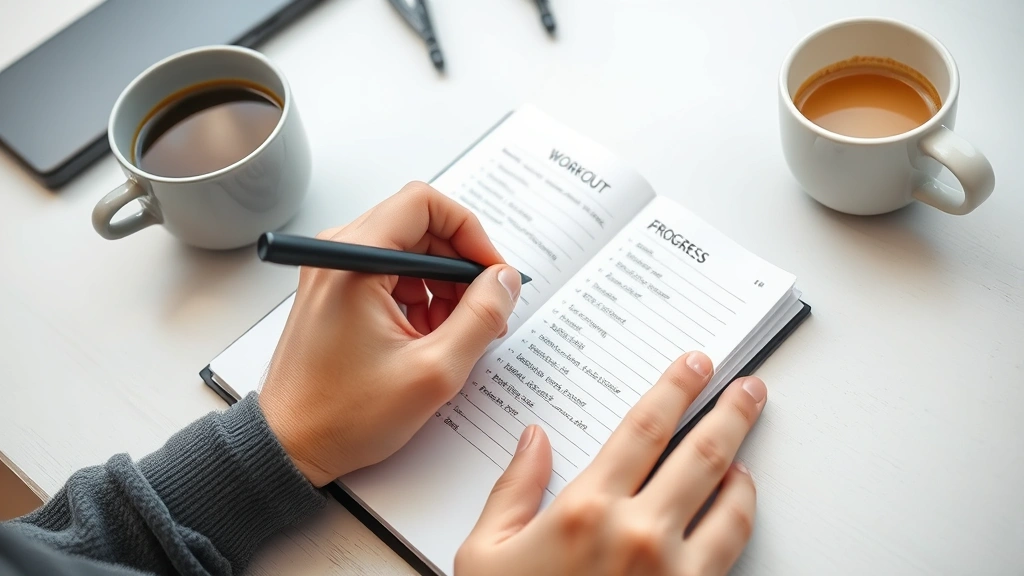
Use a simple system: a notebook, a phone app, or even a spreadsheet. Write down what you did. Over weeks and months, you’ll see patterns. You got stronger. You’re more consistent. Your body changed. That’s the feedback loop that keeps motivation alive—not comparison to someone else, but evidence that you’re actually progressing.
If you’re tracking more formally, understanding which metrics actually matter saves you from chasing vanity numbers that don’t reflect real progress. Strength, endurance, body composition, and how you feel matter. Everything else is noise.
The psychology here is important: celebrate small wins. Hit three workouts in a week when you planned three? That’s a win. Ate vegetables with every meal? Win. Slept eight hours? Win. These aren’t huge, but they’re real progress, and your brain needs to recognize them to stay motivated.
FAQ
How long does it actually take to build a fitness habit?
The research says 66 days on average, but it ranges from 18 to 254 days depending on the person and the habit. A three-minute daily habit forms faster than a one-hour gym session. The point: give yourself at least 8-12 weeks before deciding if something’s working. Your brain needs time to automate the pattern.
What if I hate the gym?
Don’t go to the gym. Seriously. Fitness happens through hiking, dancing, sports, swimming, yoga, cycling, rock climbing, or literally any movement you actually enjoy. The “best” workout is the one you’ll actually do. Find what doesn’t feel like punishment, and build from there.
Can I build habits if I have an inconsistent schedule?
Yes, but you need flexibility. Instead of “Monday at 6 AM,” try “three times this week, whenever works.” Or “every time I finish work, I move for 15 minutes.” Anchor habits to things that are consistent in your life rather than specific times. Your schedule might change, but your patterns can stay.
Do I need supplements to see results?
No. Protein powder is convenient if you struggle to eat enough protein, but it’s not magic. Creatine has solid research supporting it for muscle building, but it’s optional. Everything else is mostly marketing. Focus on food first, water second, sleep third. Supplements are the cherry on top, not the foundation.
What if I fall off track?
You’re human. It happens. The key is getting back within 2-3 days. Don’t wait for Monday or the first of the month. The longer you’re off, the harder it gets to restart because the habit loop breaks. Miss a day, acknowledge it, and do the thing the next day. That’s it.


