
How to Build Muscle While Losing Fat: The Real Science Behind Body Recomposition
You’ve probably heard it before: “You can’t build muscle and lose fat at the same time.” But here’s the thing—that advice is outdated. Whether you’re starting your fitness journey or looking to transform your physique, body recomposition is absolutely possible, and it might be the most sustainable approach you’ve never tried.
The fitness industry loves to push extremes: bulk hard, cut hard, repeat. But what if there’s a smarter way? What if you could actually feel stronger, look better, and maintain your sanity through the process? That’s what body recomposition is all about. It’s the art of simultaneously building lean muscle while shedding body fat—and yes, it’s real, it’s science-backed, and it’s way less miserable than traditional bulking and cutting cycles.
What Is Body Recomposition?
Body recomposition is exactly what it sounds like: changing the composition of your body by increasing muscle mass while decreasing fat mass. Unlike traditional cutting (where you lose weight but also lose some muscle) or bulking (where you gain muscle but also gain fat), recomposition aims to optimize both simultaneously.
Think of it like renovating a house—you’re not just tearing everything down and rebuilding from scratch. You’re keeping what works, upgrading what doesn’t, and creating something better in the process. Your body responds similarly when you give it the right stimulus and fuel.
The beauty here? You might not see the scale move much, which freaks people out. But your clothes fit differently, your strength increases, and when you look in the mirror, you see the changes that actually matter. That’s body recomposition in action.
The Science Behind It
For decades, conventional wisdom said you had to choose: build muscle (caloric surplus) or lose fat (caloric deficit). You couldn’t do both. But research has shown this isn’t entirely accurate, especially for certain populations.
Here’s the mechanism: When you’re in a slight caloric deficit (not extreme), combined with adequate protein intake and progressive resistance training, your body can preferentially use stored fat for energy while simultaneously building new muscle tissue. This works best when:
- You’re new to strength training (beginner advantage)
- You’re returning to training after a break
- You have higher body fat to lose
- You’re patient and consistent
A study published in the Journal of Sports Sciences found that trained individuals consuming adequate protein and performing resistance training could achieve significant muscle gain while in a modest caloric deficit. Another PubMed analysis confirmed that protein timing and total daily intake were more critical than meal frequency for muscle protein synthesis.
The key is understanding that your body prioritizes muscle preservation and growth when you’re lifting heavy and eating enough protein. It’s not magic—it’s biochemistry.
Nutrition Strategy for Success
You can’t out-train a bad diet, and you definitely can’t recompose without getting nutrition right. But the good news? It’s simpler than fitness marketing makes it sound.
Protein Is Non-Negotiable
This is where most people fail. Aim for 0.7 to 1 gram of protein per pound of body weight daily. If you weigh 180 pounds, you’re looking at 126-180 grams per day. This isn’t optional—protein provides the amino acids your muscles need to rebuild and grow stronger.
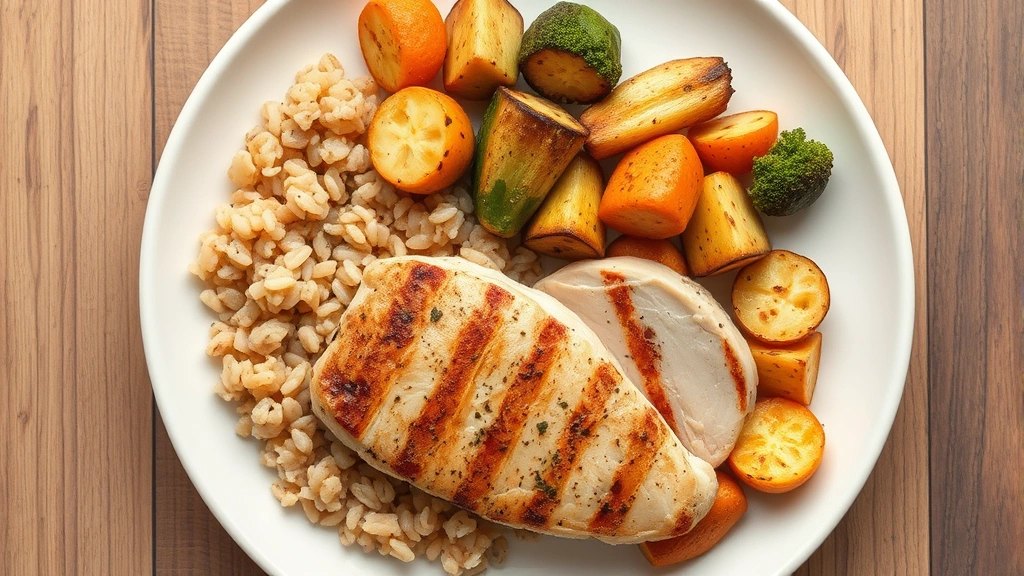
Spread it across your meals. Have protein at breakfast, lunch, dinner, and snacks if needed. It doesn’t have to be chicken breast and rice (though that works). Greek yogurt, eggs, legumes, fish, tofu, cottage cheese—pick what you actually enjoy eating.
Caloric Deficit (But Not Too Much)
This is where patience matters. You want a small deficit of 300-500 calories below maintenance. Not 1,000. Not 1,500. That aggressive deficit will cannibalize muscle tissue and make you miserable.
How do you find your maintenance calories? Track your intake for a week and see if your weight stays stable. That’s your baseline. Then reduce by 300-500 calories. You should lose about 0.5-1 pound per week. If you’re dropping faster, eat more.
Micronutrients Matter
Your body can’t build muscle or lose fat efficiently without proper micronutrition. Focus on whole foods: vegetables, fruits, lean proteins, whole grains, and healthy fats. If you’re consistently hitting your macros but ignoring micronutrients, you’re handicapping your results.
Consider checking out our guide on nutrition fundamentals to dial in the details, or explore meal prep strategies to make consistency easier.
Training Approach That Works
You can’t build muscle without lifting weights. This isn’t negotiable. But the good news? You don’t need an insanely complicated program.
Progressive Resistance Training
Your muscles grow in response to progressive overload—gradually increasing the demand placed on them. This means:
- Lifting weights 3-5 days per week
- Focusing on compound movements (squats, deadlifts, bench press, rows)
- Adding weight, reps, or sets over time
- Maintaining proper form (quality over ego-lifting)
A solid beginner program hits each major muscle group 2-3 times per week. More advanced lifters might use periodized training with phases focused on strength, hypertrophy, and power. The National Academy of Sports Medicine (NASM) has excellent resources on program design if you want to dive deeper.
Cardiovascular Activity (Strategic, Not Excessive)
Cardio isn’t the enemy—excessive cardio is. If you’re doing 90 minutes of running daily while trying to build muscle in a deficit, you’re working against yourself. Instead:
- Keep cardio moderate: 2-3 sessions of 20-30 minutes per week
- Focus on low-impact options (walking, cycling, swimming) to preserve energy for lifting
- Use cardio for general health and recovery, not as your primary fat-loss tool
The deficit creates fat loss. Lifting creates muscle growth. Cardio supports both without interfering.
Recovery Is Training
Your muscles don’t grow in the gym—they grow while you’re recovering. This means:
- Sleep 7-9 hours nightly (non-negotiable for muscle growth and fat loss)
- Manage stress (cortisol elevation undermines recomposition)
- Take rest days (2 per week minimum)
- Consider deload weeks every 4-6 weeks (reduce volume by 40-50%)
Recovery isn’t lazy—it’s where the magic happens.
Timeline and Realistic Expectations
Here’s where honesty matters: body recomposition is slower than pure bulking or cutting. But it’s sustainable, and the results last.
Beginners (first 6-12 months): You can expect to lose 1-2% of body fat while gaining 5-15 pounds of muscle, depending on starting point and consistency.
Intermediate lifters (1-2 years in): Progress slows. You might lose 1-2 pounds of fat monthly while gaining 0.5-1 pound of muscle monthly.
Advanced lifters: Recomposition becomes slower. You might consider traditional bulking/cutting phases for more dramatic changes.
The scale won’t move much. Your waist might shrink while your shoulders broaden. Your strength increases while your weight stays stable. This confuses people who’ve been conditioned to chase scale weight, but it’s actually the best indicator of success.
Common Mistakes to Avoid
After years of coaching and personal training, I’ve seen these derail recomposition attempts:
Going Too Hard on the Deficit
“If 500 calories is good, 1,000 must be better, right?” Wrong. You’ll lose muscle, feel awful, and likely quit. Stick to 300-500 calories below maintenance.
Neglecting Progressive Overload
You can’t expect muscle growth without challenging your muscles. If you’re doing the same weight for the same reps every week, nothing changes. Track your workouts and push progression.
Underestimating Protein Needs
“I’ll just eat when I’m hungry.” That doesn’t work. Most people undershoot protein significantly. Use a tracker for two weeks to understand your baseline, then adjust.
Comparing Your Beginning to Someone Else’s Middle
Social media shows highlight reels. Someone who looks shredded might be in week 8 of a cut after 2 years of consistent training. Your day-one comparison is unfair and demoralizing.
Inconsistency Over Time
Body recomposition requires months, not weeks. If you’re 80% consistent, you’ll get 80% results. If you’re 50% consistent, results plateau or reverse. Pick a program and commit to it for at least 12 weeks before evaluating.
For more detail on avoiding common training mistakes, check out our article on progressive overload or dive into strength training fundamentals.
Putting It All Together: Your Action Plan
Okay, you understand the science. Here’s how to actually implement it:
- Week 1: Track your current intake and weight for 7 days. Establish baseline maintenance calories.
- Week 2: Reduce calories by 300-500. Start a structured lifting program (3-4 days per week minimum).
- Week 3+: Commit to the process. Track protein intake daily. Add weight or reps to your lifts weekly.
- Every 4 weeks: Take progress photos and measurements. Ignore the scale unless it drops dramatically (which might mean you’re in too big a deficit).
- Every 12 weeks: Evaluate results. Are you getting stronger? Do your clothes fit better? Is your energy stable? These matter more than scale weight.
If you’re new to tracking, our guide on calorie counting breaks it down simply. And if you need a training template, check out our beginner strength program.

What About Supplements?
Let’s be real: supplements are optional. They can help, but they’re not required for body recomposition. The hierarchy is:
- Consistent training and nutrition (non-negotiable)
- Sleep and stress management (non-negotiable)
- Whey protein powder (convenient, not essential)
- Creatine monohydrate (evidence-backed, modest benefit)
- Multivitamin (insurance policy if diet is imperfect)
- Everything else (nice-to-have, not necessary)
Don’t buy supplements hoping they’ll compensate for inconsistent training or poor nutrition. They won’t. Master the fundamentals first.
FAQ
How long until I see results?
You’ll likely notice strength gains within 2-4 weeks. Visual changes (clothes fitting differently, muscle definition) typically appear by week 6-8 with consistency. Dramatic transformations take 12+ weeks.
Can I do body recomposition if I’m already lean?
It’s harder. The more body fat you have to lose, the easier recomposition becomes. If you’re already lean (sub-15% for men, sub-25% for women), you might see better results with traditional bulking/cutting cycles. That said, recomposition is still possible—it’ll just be slower.
What if I’m not losing weight but feel stronger?
That’s success. Muscle is denser than fat. You could be losing 2 pounds of fat and gaining 2 pounds of muscle simultaneously, which shows as zero scale movement but massive body composition changes. Trust the process.
Do I need to count calories forever?
Not forever, but initially yes. Spend 4-12 weeks tracking to understand portion sizes and calorie content of your favorite foods. Eventually, you’ll develop intuition and can rely on hunger cues and progress photos. Some people always track; others move to intuitive eating once they’ve learned the basics.
Can beginners really gain muscle in a deficit?
Yes, especially in the first 6-12 months of training. This is called “beginner’s advantage” or “newbie gains.” Your untrained muscles respond powerfully to stimulus, and your body is willing to build muscle even with a modest deficit. Take advantage of this window.
What’s the best training split for recomposition?
For most people, a full-body routine 3 days per week or an upper/lower split 4 days per week works great. Pick something you’ll actually stick with. Consistency beats optimization every time. Check our training splits guide for more options.
Should I track macros or just calories?
Track calories for the deficit. Track protein to ensure you’re getting enough (0.7-1g per pound). After that, carbs and fats can be flexible based on your preferences and energy levels. Some people thrive on higher carbs; others prefer higher fat. Experiment and find what keeps you full and energized.
Is body recomposition sustainable?
More sustainable than traditional bulking/cutting, yes. But it requires patience and consistency. The scale won’t move much (which some people find demotivating), and progress is gradual. If you need dramatic changes quickly, traditional cutting might work better short-term. But for long-term health and sustainability? Body recomposition is the winner.
The Bottom Line
Body recomposition isn’t flashy. It won’t give you a dramatic “before and after” in 12 weeks (though you might be surprised). It requires patience, consistency, and a willingness to trust the process when the scale doesn’t move.
But here’s what it does deliver: sustainable results, increased strength, better health markers, improved body composition, and a relationship with food and training that actually feels sustainable long-term. You’re not white-knuckling through a brutal cut or gaining 30 pounds of fat to get 5 pounds of muscle.
You’re doing the smart thing. You’re building a better version of yourself—not for Instagram, not for a number on a scale, but for a life where you feel strong, look good, and don’t have to choose between progress and sanity.
That’s worth the patience. That’s worth the consistency. And honestly? That’s the real fitness goal.
Ready to start? Pick a program, dial in your nutrition, and commit to 12 weeks. The results will follow. You’ve got this.


