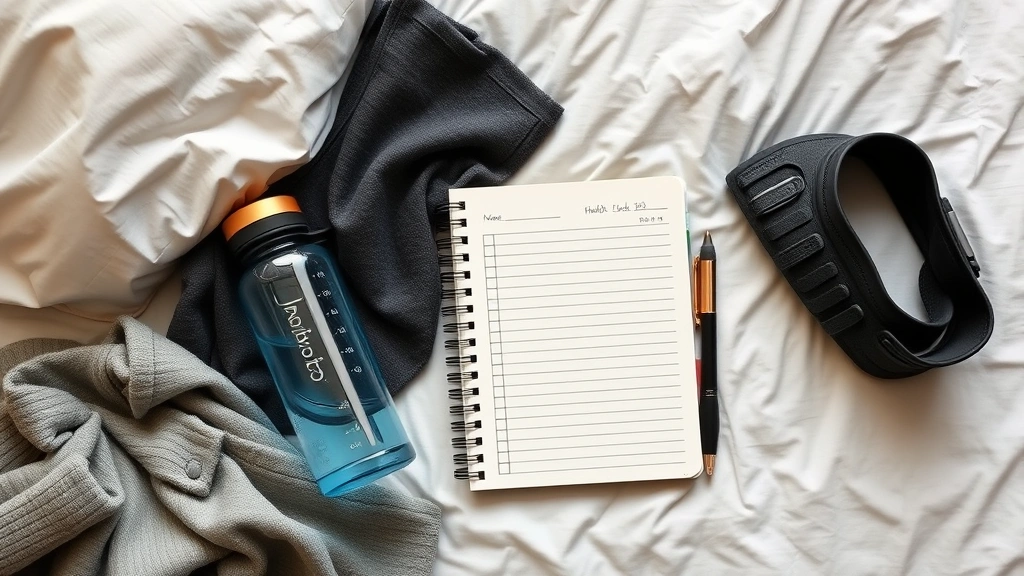
Building Sustainable Fitness Habits: The Real Guide to Lasting Results
Let’s be honest—you’ve probably started a fitness routine before. Maybe you crushed it for three weeks, felt amazing, then life happened and suddenly you’re back to square one. That’s not a failure on your part. It’s just the reality of trying to build habits without a solid framework.
The difference between people who transform their fitness and those who cycle through New Year’s resolutions isn’t willpower or genetics. It’s understanding how to build sustainable habits that actually fit into your real life. Not the Instagram-highlight-reel version of your life, but the actual messy, busy, complicated version you’re living right now.
This guide walks you through creating fitness habits that stick—without requiring you to become a professional athlete or spend three hours in the gym daily.
Why Most Fitness Habits Fail (And What Actually Works)
Here’s what typically happens: You decide Monday is your fresh start. You’re going to hit the gym five days a week, meal prep on Sundays, and never eat processed food again. You’ve got the motivation, you’ve got the plan, and you’re ready.
By Wednesday, you’re exhausted. By the following Monday, you’ve quit.
The problem isn’t that your goal was too ambitious—well, it partly is—but more importantly, you’re fighting against how human behavior actually works. According to research on habit formation published in the European Journal of Social Psychology, it takes an average of 66 days for a behavior to become automatic. But that number only applies if you’re building gradually, consistently, and with realistic expectations.
When you try to overhaul everything at once, you’re not building a habit—you’re running a sprint you can’t sustain. Sustainable fitness habits require a different approach entirely.
The Science Behind Habit Formation
Before we talk about your specific routine, you need to understand how habits actually form. There’s a framework called the habit loop, and it’s pretty straightforward: cue → routine → reward.
The cue is the trigger (your alarm goes off, you finish work, you see your gym bag). The routine is the behavior (you get dressed, you drive to the gym, you work out). The reward is what your brain gets from it (endorphins, a sense of accomplishment, a post-workout smoothie).
Most people focus obsessively on the routine part—they pick the “perfect” workout program—but they ignore the cue and reward. That’s backwards. The American Council on Exercise emphasizes that habit success depends on making the cue obvious, the routine easy, and the reward immediate and satisfying.
If your cue is “I’ll go to the gym whenever I feel motivated,” you’re already losing. Motivation is inconsistent. Motivation is not a reliable cue. Instead, you need something concrete: after your morning coffee, before dinner, right after work. Something that happens every single day regardless of how you feel.
The routine should be so simple that you can do it on your worst day. Not your best day—your worst day. That’s the real test of sustainability.
And the reward? That needs to be immediate. “I’ll look better in three months” doesn’t work. Your brain needs something now: the satisfaction of checking off a box, a post-workout shower, a text to your friend, whatever feels genuinely good to you.
Building Your Foundation: Start Stupidly Small
This is where most people mess up, and honestly, it’s where the real transformation begins. You need to start small enough that it feels almost ridiculously easy. I’m talking embarrassingly small.
If you’re currently sedentary, your first habit isn’t “work out five days a week.” It’s “put on workout clothes every day” or “do 10 minutes of movement three days a week.” That’s it. That’s the whole goal.
Why? Because you’re not actually building the fitness habit yet—you’re building the showing up habit. You’re creating the neural pathways that associate your cue with action. You’re proving to yourself that you can do this consistently. Once that’s solid, you can add complexity.
There’s a concept called “temptation bundling” that works beautifully here. Pair your habit with something you already enjoy. Love podcasts? Listen to them only during workouts. Love coffee? Make your post-workout smoothie your reward. Love your friend? Schedule workouts together. You’re not adding motivation—you’re adding enjoyment to something that already needs to happen.
When you’re ready to progress, check out our guide on progressive overload to understand how to increase intensity safely without derailing your habit. The key is gradual: add one small element at a time, never everything at once.
Creating Environmental Wins
Your environment does more work than your willpower ever could. If you want to build a sustainable fitness habit, you need to design your surroundings to make the habit easy and the alternative difficult.
This is practical stuff: If you want to work out in the morning, sleep in your gym clothes (or put them right next to your bed). If you want to eat better, don’t keep junk food visible in your kitchen. If you want to stretch regularly, put a yoga mat in the spot where you usually sit down to watch TV. You’re not fighting yourself—you’re working with your environment.
One of the most effective environmental changes is proximity. The closer your gym is to your home or work, the more likely you’ll actually go. The more visible your workout gear is, the more likely you’ll use it. This isn’t laziness—it’s how human behavior works, and acknowledging it means you can work with it instead of against it.
Another environmental win: remove friction from the good habit and add friction to the bad one. Want to drink more water? Keep a bottle on your desk. Want to scroll less? Leave your phone in another room during workouts. Want to eat better? Meal prep on Sunday so healthy options are ready to grab. These aren’t revolutionary ideas, but they work because they respect how you actually function.
Tracking Progress Without Obsession
There’s a difference between tracking progress and obsessing over metrics. Tracking keeps you accountable and shows you what’s working. Obsessing makes you miserable and disconnects you from how you actually feel.
The best tracking systems are simple and visible. A calendar where you mark off days you completed your habit. A notes app where you log how you felt. A spreadsheet with your key metrics if that motivates you. Pick one system and stick with it. The goal is to notice patterns, not to achieve perfection.
One thing most people get wrong: they track the wrong metrics. Don’t just track weight or how many workouts you did. Track how your clothes fit, how your energy feels, how your mood shifts, how much stronger you’re getting. These are the things that actually matter and that keep you motivated when the scale isn’t moving (because it won’t move linearly—that’s normal).
If you’re interested in the science behind different training approaches and how to measure progress effectively, the American College of Sports Medicine has excellent resources on evidence-based fitness assessment.
And remember: progress isn’t always visible on a chart. Sometimes progress is “I didn’t skip my workout even though I had a terrible day.” That’s the habit solidifying. That’s the real win.
Navigating Plateaus and Setbacks
You will have a bad week. You will miss workouts. You will feel unmotivated. This isn’t a sign that you’re failing—it’s a sign that you’re human.
The difference between people who maintain fitness habits long-term and those who quit is how they handle setbacks. The people who quit see one missed workout and think “well, I’ve already broken the streak, might as well give up.” The people who maintain it see one missed workout and think “okay, I’m getting back tomorrow.”
This is called the “never miss twice” rule, and it’s powerful. You can miss once. Life happens. But missing twice is the beginning of a new habit—the habit of not working out. So the rule is simple: if you miss once, you get right back the next day. No guilt, no drama, just action.
Plateaus are different from setbacks. A plateau is when your progress stalls even though you’re doing everything right. This is actually a sign your body has adapted, which is good. It means you need to adjust your routine. This is where understanding progressive overload principles becomes crucial. It might be time to increase weight, change exercises, adjust your recovery, or try a different training style entirely.
The mistake most people make during plateaus is getting discouraged and quitting. The actually effective response is getting curious. What needs to change? What have you been avoiding? What would challenge you in a new way? Plateaus are invitations to evolve, not signs that you should give up.
Making It Social (The Right Way)
Community matters. Having people around you who support your fitness goals makes everything easier. But there’s a right way and a wrong way to make fitness social.
The wrong way is performative fitness—doing workouts for Instagram, comparing yourself to others, making it competitive in an unhealthy way. That burns people out fast.
The right way is finding your people. Maybe it’s a friend you text with about workouts. Maybe it’s a class where you see the same faces regularly. Maybe it’s an online community of people with similar goals. The point is: you’re accountable to people you actually care about, and you’re supporting each other through the realistic parts—the days you don’t want to go, the plateaus, the victories that might look small to others but feel huge to you.
One research-backed approach: having a workout partner or accountability person increases adherence significantly. You don’t have to do every workout together, but knowing someone’s counting on you (or that you’re counting on them) changes the game. It shifts your habit from “something I do for myself” to “something I do for us,” and that’s a powerful psychological difference.
If you’re looking to connect with certified professionals or find evidence-based fitness communities, NASM’s directory can help you find qualified coaches and trainers who emphasize sustainable approaches.

FAQ
How long until my fitness habit becomes automatic?
The research suggests 66 days on average, but this varies widely. Some people establish habits in 30 days, others take 100+. The timeline depends on how consistent you are, how small your initial habit is, and how well you’ve set up your environment and rewards. Focus on consistency rather than a specific timeline.
What if I travel or my routine changes?
This is why starting small is so important. If your habit is “work out five days a week at the gym,” travel derails you. If your habit is “do 15 minutes of movement daily,” travel is just a change of location. You can do bodyweight exercises in a hotel room, you can walk anywhere, you can stretch anywhere. Build flexibility into your habit from the start.
Should I track calories and macros?
Not necessarily. For most people building sustainable habits, tracking calories creates obsession and disconnection from hunger cues. Instead, focus on consistent behaviors: eating mostly whole foods, eating enough protein, drinking water, eating vegetables. These are habits that scale better than calorie counting.
How do I stay motivated when I’m not seeing results?
Reframe what “results” means. Results include: consistent workouts, better sleep, improved mood, more energy, stronger performance, better recovery. Weight and appearance are just two metrics, and they’re often the slowest to change. Track everything else and celebrate those wins. Your brain needs evidence of progress, so give it multiple types of evidence.
What’s the best workout routine for building habits?
The best routine is the one you’ll actually do consistently. Seriously. A mediocre routine you stick with beats a perfect routine you quit. Pick something you enjoy, that fits your schedule, that doesn’t require a ton of equipment or time, and that you can progress gradually. Whether that’s walking, home workouts, gym training, sports, or dancing doesn’t matter—consistency is the variable that actually changes your body.
How do I handle days when I really don’t want to work out?
You do a modified version. This is why starting small matters. On tough days, you don’t skip entirely—you do the minimum. Walked 20 minutes yesterday? Walk 10 today. Usually do 30 minutes of strength training? Do 15 minutes of stretching instead. You’re maintaining the habit and the cue-routine-reward loop without pushing yourself into burnout. This keeps you from breaking the chain and restarting from zero.