
How to Build Lean Muscle Without Gaining Fat: The Complete Science-Backed Guide
You’ve probably heard the fitness myths: “You have to eat everything in sight to build muscle,” or “Bulking means getting soft.” Here’s the reality—building lean muscle while staying lean is absolutely possible, and it’s actually the smarter way to train. It’s not some secret reserved for Instagram influencers with perfect genetics; it’s a combination of smart nutrition, progressive training, and patience.
The good news? Your body is way more capable than you think. When you nail the fundamentals, you can build muscle and keep your abs visible at the same time. It’s called body recomposition, and it’s the goal most of us actually want. Let’s break down exactly how to make it happen.
Why a Small Calorie Surplus Matters
Let’s talk calories first because this is where most people go wrong. Building muscle requires energy, and that energy comes from food. But here’s the thing—you don’t need to eat 500+ calories above maintenance like you might’ve heard. That’s a recipe for gaining unnecessary fat alongside your muscle.
A modest calorie surplus of 300-500 calories above your maintenance level is the sweet spot. This gives your body enough energy to build new muscle tissue without excess energy being stored as fat. It sounds simple, but it changes everything. You’re giving your muscles the resources they need while staying relatively lean throughout the process.
How do you find your maintenance calories? Start by tracking what you eat for a week or two at your current weight without trying to gain or lose. If your weight stays stable, that’s roughly your maintenance. From there, add 300-500 calories and monitor weekly. Aim for 0.5-1 pound of weight gain per week. If you’re gaining faster than that, you’re probably overeating.
The reason this matters is psychological too. When you’re not gaining a ton of excess fat, you stay motivated. You can see your muscle definition improving. You don’t need to do a brutal cut later to reveal what you’ve built. It’s a sustainable approach that works with your body, not against it.
Check out our guide on nutrition fundamentals for muscle growth to dial in your specific numbers based on your activity level and goals.
Protein: Your Muscle-Building Foundation
Protein is non-negotiable when you’re building lean muscle. Your muscles are literally made of amino acids, and you need a consistent supply to repair and build new tissue after training. Here’s what the science says: aim for 0.7-1 gram of protein per pound of body weight daily.
That might sound like a lot, but spread across three to four meals, it’s totally manageable. If you weigh 180 pounds, you’re looking at 125-180 grams of protein daily. That could be:
- Chicken breast (31g per 3.5 oz)
- Eggs (6g per egg)
- Greek yogurt (20g per 7 oz)
- Salmon (25g per 3.5 oz)
- Lean beef (26g per 3.5 oz)
- Protein powder (20-30g per scoop)
- Cottage cheese (28g per cup)
The timing matters less than you’d think—what really matters is hitting your daily total. That said, getting protein with each meal helps with satiety and keeps muscle protein synthesis elevated throughout the day. It also helps you feel fuller, which makes sticking to your calorie target easier.
Don’t neglect whole food sources just because protein powder is convenient. Whole foods come with micronutrients, fiber, and satiety that powders can’t replicate. Use powder as a supplement to real food, not a replacement for it.
For detailed meal planning strategies, check out our complete meal prep guide for muscle building.
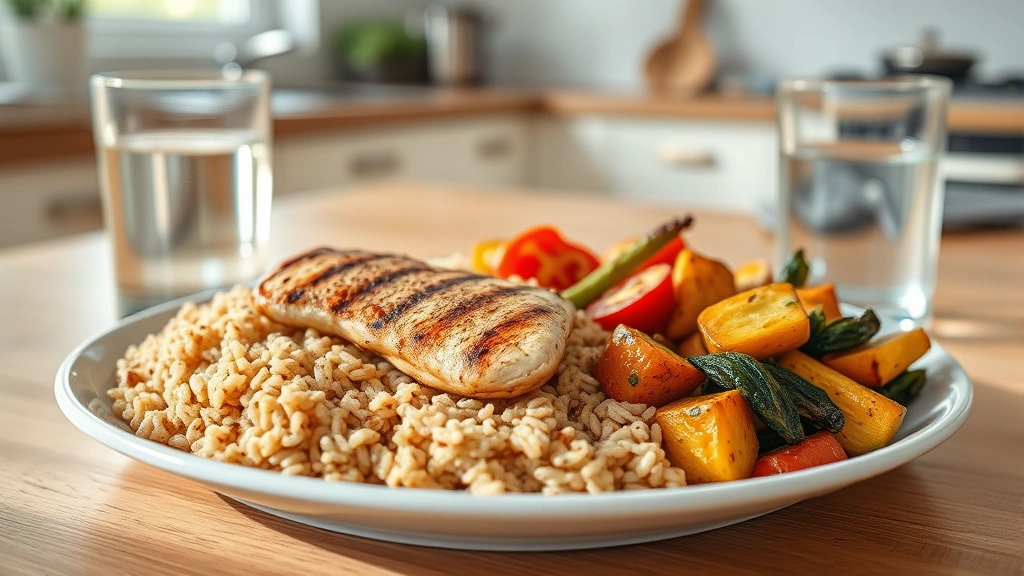
” alt=”Person preparing a high-protein meal in a bright kitchen, featuring grilled chicken breast, vegetables, and brown rice on a plate”/>
Progressive Resistance Training for Lean Gains
You can’t build muscle without stimulus, and that stimulus comes from challenging your muscles with progressive resistance. This is the non-negotiable part of the equation. You need to lift weights, and you need to gradually make those workouts harder over time.
Progressive overload doesn’t mean maxing out every session. It means consistently adding small amounts of weight, doing an extra rep or two, or improving your form week to week. Maybe you did 10 reps of 185 pounds last week; this week you hit 12 reps with the same weight. That’s progress. Next week, you bump to 190 pounds for 10 reps. That’s the game.
The best program is one you’ll actually follow. Whether it’s an upper/lower split, a push/pull/legs routine, or a full-body three days a week—consistency beats perfection. You want to train each muscle group 2-3 times per week with adequate volume and intensity.
Volume is important here. You generally want 10-20 sets per muscle group per week. That might sound like a lot, but it’s spread across multiple sessions. A chest workout might include:
- Barbell bench press: 4 sets of 6-8 reps
- Incline dumbbell press: 3 sets of 8-10 reps
- Cable flyes: 3 sets of 10-12 reps
That’s 10 sets for chest in one session. Hit chest twice a week, and you’re at 20 sets—right in the sweet spot for muscle growth without overtraining.
The reason this works is that muscle growth (hypertrophy) requires mechanical tension, muscle damage, and metabolic stress. Progressive resistance training creates all three. Learn more about choosing the right training split for your schedule to build a program that fits your life.
Smart Cardio Without Killing Your Gains
“Does cardio kill gains?” is the question I hear constantly, and the answer is no—bad cardio strategy kills gains. Moderate cardio actually helps you stay lean while building muscle, improves your work capacity, and keeps your heart healthy. That’s a win-win.
The key is moderation and smart timing. You don’t need to run 10 miles a week. 150-300 minutes of moderate-intensity cardio (where you can hold a conversation but can’t sing) is plenty. That could be:
- Three 20-minute jogs on non-lifting days
- Four 30-minute bike rides
- Two 45-minute hiking sessions
- Mix of walking, swimming, and rowing
The type matters less than the consistency. Pick something you don’t hate because you’ll actually do it. Walking is criminally underrated—it burns calories, doesn’t interfere with recovery, and you can do it daily without feeling wrecked.
Timing cardio after resistance training (if you’re doing it the same day) is smarter than before. You want your glycogen and energy systems fresh for lifting. If you do cardio first, you’re starting your strength work in a depleted state. That said, if your schedule requires morning cardio and evening lifting, it’s not a dealbreaker—consistency matters more than perfect timing.
High-intensity interval training (HIIT) can be useful, but don’t overdo it. Two HIIT sessions per week max if you’re in a muscle-building phase. Too much HIIT can interfere with recovery and actually eat into your muscle gains.
Recovery: The Often-Forgotten Pillar
Here’s what nobody tells you: the actual muscle growth happens outside the gym. When you lift weights, you create microscopic tears in muscle fibers. Your body repairs those tears and builds them back bigger and stronger during rest. Skip recovery, and you skip gains.
Sleep is the biggest lever. Aim for 7-9 hours nightly. During deep sleep, your body releases growth hormone, which is essential for muscle building. Chronic sleep deprivation tanked testosterone and cortisol levels, both of which hurt muscle growth. If you’re only sleeping 5-6 hours, you’re sabotaging yourself no matter how perfect your training is.
Beyond sleep, recovery includes:
- Nutrition between workouts: Your post-workout meal matters, but so does what you eat the next day and the day after
- Hydration: Dehydration impairs strength and recovery; aim for half your body weight in ounces of water daily
- Stress management: High cortisol (stress hormone) can actually break down muscle; meditation, walks, and hobbies help
- Active recovery: Light movement on rest days improves blood flow without taxing your nervous system
- Stretching and mobility: Fifteen minutes of stretching post-workout reduces soreness and improves range of motion
Soreness (DOMS) is normal when starting or increasing volume, but it shouldn’t be debilitating. If you can’t walk down stairs, you overdid it. The goal is challenging your muscles, not destroying them.
Learn more about optimizing sleep for muscle growth and how to structure your weekly training schedule for maximum recovery.
Tracking Progress the Right Way
You can’t improve what you don’t measure. But here’s where people get obsessive—you don’t need a fancy app or a scale that measures body fat percentage. Simple tracking works better than complex tracking.
Weekly weigh-ins are valuable, but don’t obsess over daily fluctuations. Your weight bounces 2-3 pounds daily based on water retention, food timing, and hormones. Weigh yourself once a week, same time of day (morning after bathroom, before eating), and track the weekly average. You want to see a slow upward trend of 0.5-1 pound per week.
Progress photos every 2-4 weeks are honestly more useful than the scale. Take photos from the front, side, and back under the same lighting. The visual changes tell the real story. You’ll see muscle definition improving and body composition shifting before the scale reflects much change.
In the gym, track your lifts. Write down your weights, reps, and sets for every exercise. Your goal is progressive overload, and you can’t achieve that without knowing what you did last week. A simple notebook works. So does your phone’s notes app. Fancy apps are nice, but consistency matters more than features.
Measurements can be useful too—chest, arms, shoulders, waist. Take them monthly. You might gain an inch on your arms while your waist stays the same. That’s exactly what you want—muscle gain without fat gain.
Strength gains are the best indicator that you’re building muscle. If you’re getting stronger week to week, you’re building muscle. It’s that simple. Check out our guide to effective workout logging for templates and strategies.

” alt=”Close-up of a person’s muscular shoulders and back while doing a pull-up on a bar, showing defined muscle definition and athletic build”/>
FAQ
How long does it take to build noticeable lean muscle?
You’ll feel stronger in 2-3 weeks. You’ll see visible changes in 4-6 weeks if you’re consistent with training, nutrition, and sleep. Significant transformation takes 8-12 weeks. Patience is your friend here. Building lean muscle is a marathon, not a sprint.
Can I build muscle in a calorie deficit?
Yes, but it’s slower. Beginners and people with higher body fat can build muscle while losing fat (body recomposition) in a slight deficit. But if you’re already relatively lean, a small surplus accelerates muscle growth. A deficit prioritizes fat loss; a surplus prioritizes muscle gain. Pick your priority and commit to it for 8-12 weeks.
Do I need supplements to build lean muscle?
Nope. Whole food gets you 95% of the way there. Protein powder is convenient for hitting protein targets, but it’s optional. Creatine monohydrate is the only supplement with solid research showing it helps muscle growth (5g daily), but even that’s optional. Focus on nutrition and training first; supplements are just the cherry on top.
How often should I change my workout program?
Every 8-12 weeks. You don’t need to change it before then—progressive overload within the same program works great. But after 12 weeks, your body adapts and progress plateaus. Switch exercises, rep ranges, or training splits to provide new stimulus. The best program is one you’ll actually follow consistently.
Is it normal to gain some fat while building muscle?
Yes. Even with a perfect calorie surplus and training, you’ll probably gain 20-30% fat along with your muscle. That’s why body recomposition is about accepting a slow gain while staying relatively lean, not staying shredded while gaining muscle. It’s a trade-off. You can always cut the fat later and keep the muscle.
What if I’m not seeing progress?
First, give it 4-6 weeks of consistent effort. If you’re still stuck, check these things: Progressive overload? Are you actually getting stronger? Protein intake? Are you hitting your daily target? Calories? Are you actually eating in a surplus or accidentally undereating? Sleep? Are you getting 7+ hours? Consistency? Are you training regularly, or is life getting in the way? Usually it’s one of these five things.


