
How to Build Muscle Without Going to the Gym: Your Complete Home Workout Guide
Let’s be real—not everyone has access to a gym, and that’s completely okay. Whether you’re dealing with a packed schedule, budget constraints, or just prefer working out at home, building muscle is absolutely possible without fancy equipment or a monthly membership. I’ve seen people transform their physiques using nothing but bodyweight, resistance bands, and a little creativity. The secret isn’t the location; it’s consistency, progressive overload, and understanding how your muscles actually grow.
The fitness industry wants you to believe you need a $200/month gym membership to see results. That’s simply not true. Your muscles don’t know if you’re lifting a barbell or your own bodyweight—they just know they’re being challenged. In this guide, I’m going to walk you through everything you need to know about building muscle at home, from programming principles to nutrition strategies that actually work.
Understanding Muscle Growth Fundamentals
Before we jump into specific exercises, let’s talk about the science behind muscle growth. When you exercise, you create microscopic tears in muscle fibers. Your body repairs these tears by building new muscle protein, making the muscle slightly larger and stronger. This process, called hypertrophy, requires three things: mechanical tension, muscle damage, and metabolic stress.
Here’s what that means in practical terms: you need to challenge your muscles with resistance (tension), you need to work them hard enough to cause fatigue (damage), and you need to keep them under tension for adequate time (metabolic stress). The good news? You can achieve all three at home without any equipment at all.
According to research from the American College of Sports Medicine (ACSM), progressive resistance training—whether using external weights or bodyweight—triggers the same muscle-building adaptations. The key variable isn’t the tool; it’s progressive challenge over time. This is why a beginner who’s never done a push-up will see dramatic muscle gains from bodyweight training, while an advanced lifter might need more creative progression strategies.
One common misconception is that you need heavy weight to build muscle. While progressive overload is essential, studies published in PubMed show that moderate loads (even light resistance) can trigger significant hypertrophy if you’re training to near failure and maintaining high training volume. This is perfect news for home trainers.
Best Bodyweight Exercises for Muscle Building
Let’s focus on the movements that’ll actually build muscle without equipment. These aren’t random exercises—they’re compound movements that engage multiple muscle groups and allow for progressive challenge.
Push-Up Variations
Push-ups are the foundation of upper body development at home. If standard push-ups feel too easy, you’ve got progression options: archer push-ups (shifting weight side to side), decline push-ups (feet elevated), pseudo planche push-ups, or diamond push-ups for triceps emphasis. The goal is finding a variation that challenges you for 6-12 reps.
Bodyweight Squats and Lunges
Your legs are your largest muscle group, and training them triggers whole-body growth hormones. Bodyweight squats are a starting point, but you can progress to pistol squat progressions (single-leg squats), jump squats for explosive power, or Bulgarian split squats using a chair. These movements build serious leg mass and strength.
Dips
Using a chair, bench, or sturdy table, dips are incredible for chest, shoulders, and triceps. They’re a true upper body builder. Start with feet on the ground and progress to elevated feet as you get stronger.
Inverted Rows
If you have a sturdy table or can use a pull-up bar, inverted rows are phenomenal for back development. They’re easier than pull-ups but still incredibly effective for building back thickness and strength.
Handstand Work
Wall-assisted handstands and handstand push-up progressions build serious shoulder and upper back strength. Start with wall holds and progress to pike push-ups, then handstand push-ups against the wall.
For a comprehensive approach to best exercises for muscle growth, understanding how to progress these movements is crucial. You’re not just doing the exercises once and calling it done—you’re constantly finding ways to make them harder.
Progressive Overload Strategies at Home
This is where most home trainers stumble. Progressive overload—gradually increasing the challenge—is non-negotiable for continued muscle growth. Without it, your body adapts and growth plateaus. Here’s how to apply it at home:
Increase Reps and Sets
If you’re doing 3 sets of 10 push-ups, next week aim for 3 sets of 12. Once that feels manageable, add another set. This is the simplest progression and works surprisingly well.
Decrease Rest Periods
Do the same workout in less time. If you’re resting 60 seconds between sets, drop it to 45 seconds. This increases metabolic stress and forces adaptation.
Progress Exercise Variations
Move from regular push-ups to incline push-ups, then standard, then decline. Each variation presents a new challenge. The same applies to squats—progress from bodyweight to pistol squat progressions.
Add Tempo Changes
Slow down your reps. Instead of 1 second down and 1 second up, do 3 seconds down and 1 second up. This increases time under tension, a primary driver of hypertrophy. Research on Mayo Clinic’s fitness resources confirms that slower, controlled movements enhance muscle development.
Increase Training Frequency
Train the same muscle groups more often. Instead of hitting chest once weekly, train it twice. This increases total volume and accelerates growth.
Add Resistance Bands or Minimal Equipment
If budget allows, resistance bands are incredibly cheap and effective. They add variable resistance that bodyweight alone can’t provide. A pull-up bar ($30-50) opens up pull-ups and hanging leg raises, which are game-changers for back and core development.
Understanding progressive overload explained is essential to avoiding plateau. Many people get stuck because they’re doing the exact same workout every week. Your body’s incredibly adaptable—you have to keep challenging it.
Creating Your Home Workout Program
Now let’s put together an actual program. This isn’t just a random collection of exercises—it’s structured to maximize muscle growth while allowing recovery.
The Upper/Lower Split (4 Days Per Week)
Upper Body Day 1:
- Push-up variation: 4 sets x 8-12 reps
- Dips: 3 sets x 8-12 reps
- Pike push-ups: 3 sets x 10-15 reps
- Inverted rows: 3 sets x 8-12 reps
- Plank: 3 sets x 30-60 seconds
Lower Body Day 1:
- Bodyweight squats: 4 sets x 12-15 reps
- Bulgarian split squats: 3 sets x 10-12 reps per leg
- Jump squats: 3 sets x 10 reps
- Single-leg deadlift holds: 3 sets x 8-10 per leg
- Glute bridges: 3 sets x 15-20 reps
Upper Body Day 2:
- Decline push-ups: 4 sets x 8-12 reps
- Inverted rows: 4 sets x 8-12 reps
- Handstand hold progressions: 4 sets x 20-40 seconds
- Diamond push-ups: 3 sets x 10-15 reps
- Reverse plank: 3 sets x 30-60 seconds
Lower Body Day 2:
- Pistol squat progressions: 4 sets x 6-10 per leg
- Lunges: 3 sets x 10 per leg
- Single-leg glute bridges: 3 sets x 12-15 per leg
- Wall sit: 3 sets x 30-60 seconds
This program hits each muscle group twice weekly, allowing adequate recovery while maintaining high frequency. Rest 48 hours between upper body sessions and lower body sessions. For more detailed guidance on structuring your home workout routines, consider tracking your workouts and adjusting based on performance.
The beauty of this approach is flexibility. Miss a day? Do it the next day. Have 30 minutes instead of 45? Cut a set or two. The important thing is consistency over perfection.
Nutrition for Home-Based Muscle Growth
Here’s the truth: you can have the perfect workout program, but without proper nutrition, your muscles won’t grow. Muscle is built in the kitchen as much as in your workout.
Protein Intake
Aim for 0.7-1 gram of protein per pound of bodyweight daily. This gives your body the amino acids needed to repair and build muscle tissue. If you weigh 180 pounds, that’s 125-180 grams of protein daily. This doesn’t require fancy supplements—chicken, eggs, Greek yogurt, cottage cheese, beans, and fish all work great.
Caloric Surplus (Slightly)
To build muscle, you need to eat slightly more than you burn. A 300-500 calorie surplus is ideal—enough to support growth without excessive fat gain. This is where tracking matters. Use an app for a week to understand your baseline, then add 300-500 calories.
Carbohydrates for Energy
Your workouts demand energy. Carbs fuel intense training sessions and support recovery. Don’t fear them—they’re essential for performance.
Hydration and Micronutrients
Drink enough water throughout the day (at least 3-4 liters). Eat vegetables for vitamins and minerals that support recovery and hormonal function. This isn’t glamorous, but it works.
For evidence-based nutrition guidance, NASM (National Academy of Sports Medicine) provides excellent resources on sports nutrition that complement training programs.
Recovery and Consistency
Muscle doesn’t grow in the gym—it grows during recovery. This is where most home trainers fail. They crush their workouts but neglect sleep and recovery.
Sleep is Non-Negotiable
Aim for 7-9 hours nightly. During sleep, your body releases growth hormone and repairs muscle tissue. Skipping sleep is like throwing away your workout effort. If you’re not sleeping, you’re not growing.
Active Recovery Days
On rest days, do light activity—walking, yoga, stretching. This increases blood flow and aids recovery without taxing your nervous system.
Consistency Over Perfection
You don’t need perfect workouts. You need consistent workouts. Doing 80% of your program consistently beats 100% of an ambitious program you can’t maintain. Start with what you can actually do, then build from there.
Track Your Progress
Write down your workouts. How many reps? How many sets? Rest periods? This data is gold. When you see progress on paper, it’s motivating and proves you’re moving in the right direction.
The reality is that building muscle at home takes patience. You won’t see dramatic changes in 2 weeks, but after 8-12 weeks of consistent training and proper nutrition, you’ll notice real differences in strength, muscle definition, and how clothes fit. That’s the win that matters.
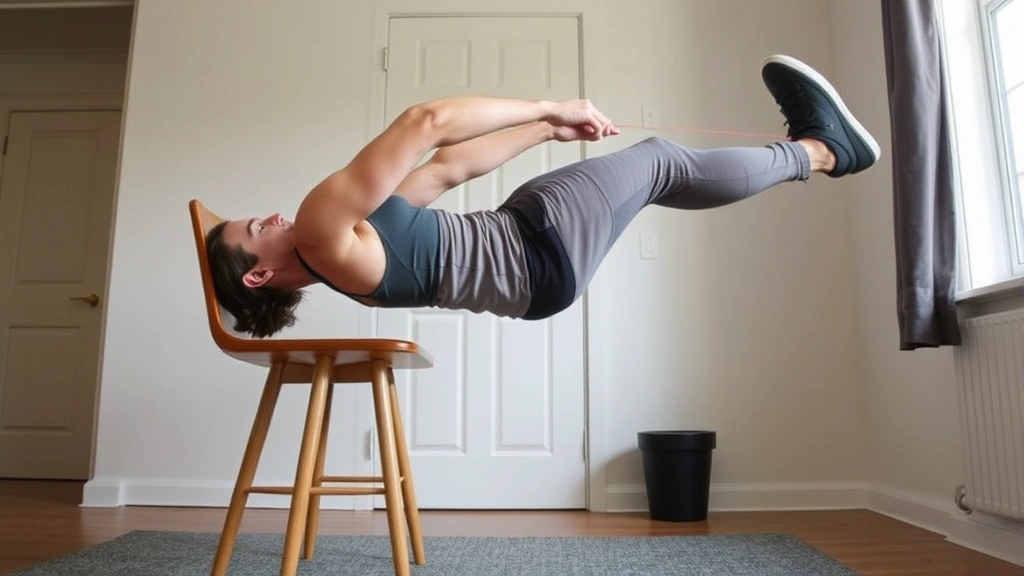
” alt=”Person performing push-up variations in a home workout space, demonstrating proper form and progression” />
FAQ
Can you really build muscle with just bodyweight?
Absolutely. Bodyweight training is incredibly effective for muscle growth, especially for beginners and intermediate trainees. The key is progressive overload—constantly making the exercises harder. Advanced lifters might need additional resistance (bands, weights) eventually, but you can build serious muscle with just your bodyweight.
How long until I see muscle growth from home workouts?
You’ll notice strength improvements within 2-3 weeks. Visible muscle growth typically takes 6-8 weeks of consistent training and proper nutrition. After 12 weeks, changes become obvious to others. Patience is your friend here.
Do I need supplements to build muscle at home?
No. Whole food protein is sufficient. If you want a supplement, whey protein powder is convenient and cost-effective, but it’s optional. Focus on getting enough protein from food first.
How many days per week should I train at home?
4-5 days weekly is ideal for muscle building. This allows adequate training frequency while providing recovery time. More isn’t always better—consistency matters more than volume.
What if I don’t have any equipment at all?
You can still build muscle with just bodyweight. Focus on progressions: regular push-ups → decline push-ups → archer push-ups → pseudo planche push-ups. Bodyweight squats → Bulgarian split squats → pistol squats. Every exercise has progression options.
Is it better to work out at home or the gym?
Neither is objectively better—it’s about what you’ll actually do consistently. Home training is convenient, saves time and money, and works great for muscle building. The gym offers variety and community. Pick whichever you’ll stick with long-term.

” alt=”Person resting and hydrating after completing a home strength training session, showing recovery importance” />


