
The Complete Guide to Building Sustainable Fitness Habits That Actually Stick
Let’s be real—you’ve probably started a fitness routine before. Maybe you crushed it for three weeks, felt invincible, and then… life happened. You skipped a workout. Then another. And suddenly you’re back where you started, wondering why it didn’t stick.
Here’s the thing: building fitness habits isn’t about willpower or finding the perfect workout. It’s about understanding how your brain works, setting yourself up for success, and being honest about what you can actually maintain. This guide walks you through the science and strategy of creating habits that become part of your life—not something you have to white-knuckle your way through.
Why Most Fitness Habits Fail
You know that feeling when you’re pumped after watching a motivational video or seeing someone’s transformation? That’s inspiration, and it’s great—but it’s not a habit. Habits are built through repetition, small wins, and environmental design. Most people fail because they try to change too much at once.
According to research from the Journal of Clinical Medicine, sustainable behavior change requires focusing on one or two behaviors at a time, not overhauling your entire life. When you try to revolutionize everything—diet, sleep, exercise, stress management—your brain gets overwhelmed. It’s like trying to learn five languages simultaneously. You’ll drop out before you make real progress in any of them.
Another common mistake is picking workouts you don’t actually enjoy. Sure, that CrossFit gym might be trendy, but if you hate it, you won’t go. Your fitness motivation can’t carry you forever. The habit has to feel rewarding, even in small ways.
Understanding the Habit Loop
Habits work through a simple three-part loop: cue, routine, reward. Understanding this changes everything about how you build fitness habits.
- Cue: The trigger that prompts the behavior. “I wake up at 6 AM” or “I finish lunch” or “I sit on the couch after work.”
- Routine: The behavior itself. Your workout, your walk, your stretching session.
- Reward: What your brain gets from it. Endorphins, a sense of accomplishment, a cool-down smoothie—whatever reinforces the behavior.
The key is that rewards need to be immediate and satisfying. Your brain doesn’t care that you’ll feel better in three months. It cares about what happens in the next five minutes. That’s why post-workout recovery rituals matter—they’re part of the reward that makes your brain want to repeat the behavior.
When you’re building a habit, make the cue obvious (set out your workout clothes the night before), make the routine easy (start with just 10 minutes), and make the reward satisfying (track it on a calendar, text a friend, have a specific snack you enjoy).
Start Stupidly Small
Here’s where most people mess up: they aim too high. “I’m going to work out six days a week!” Great. You’ll do it for two weeks and burn out. Instead, start so small it feels almost silly.
Want to build a running habit? Don’t aim for 30 minutes. Aim for putting on your running shoes three times a week. That’s it. Once that feels automatic, add five-minute runs. Once that’s easy, extend it. The American Council on Exercise emphasizes that starting with achievable goals creates a foundation for progression.
This isn’t about being lazy. It’s about understanding that your brain needs to experience success consistently. Each small win builds neural pathways that make the next step easier. After six weeks of three-times-a-week 5-minute runs, doing 30 minutes feels manageable because you’ve already built the habit.
The same applies to other fitness elements. If you’re trying to improve your flexibility and mobility, don’t commit to 45-minute yoga sessions. Start with three minutes of stretching after your shower. Build from there.

” alt=”Person in gym attire stretching outdoors in morning light with focus on form”>
Design Your Environment for Success
Your environment is more powerful than your willpower. If you want to work out in the morning, sleep in your gym clothes (okay, maybe sleep in regular clothes and put gym clothes on immediately). If you want to stay hydrated, put water bottles everywhere. If you want to avoid skipping workouts, schedule them with a friend who’ll call you out.
Environmental design means:
- Making desired behaviors obvious: Lay out your workout gear. Keep your gym bag in your car. Have your workout playlist ready.
- Making undesired behaviors invisible: Don’t keep junk food at eye level. Delete time-wasting apps from your home screen. Make your couch less comfortable (no blankets, pillows tucked away).
- Using friction strategically: Add friction to bad habits (gym membership requires a 15-minute drive to your favorite park? Great, that’s a barrier to skipping). Remove friction from good habits (home gym equipment means no commute to the gym).
This is why home workout routines work so well for some people—there’s zero friction. You roll out of bed and you’re already there. For others, the gym is the perfect environment because it’s separate from home distractions and has built-in social accountability.
The Real Secret to Consistency
Consistency doesn’t mean perfection. This is crucial: missing one workout doesn’t break your habit. Missing two in a row might. Missing a week probably will. The research from the National Academy of Sports Medicine shows that habits typically need 66 days to solidify, though this varies.
But here’s what actually matters for consistency: having a system that adapts. Life happens. You get sick. Work gets crazy. Your kid needs you. A good habit system isn’t rigid—it’s flexible.
Instead of “I work out every Monday, Wednesday, Friday at 6 AM,” try “I work out three times per week, and I’m flexible about when.” Instead of “I run five miles,” try “I do some form of cardio for 20+ minutes.” This flexibility means you can adjust based on your life without feeling like you’ve failed.
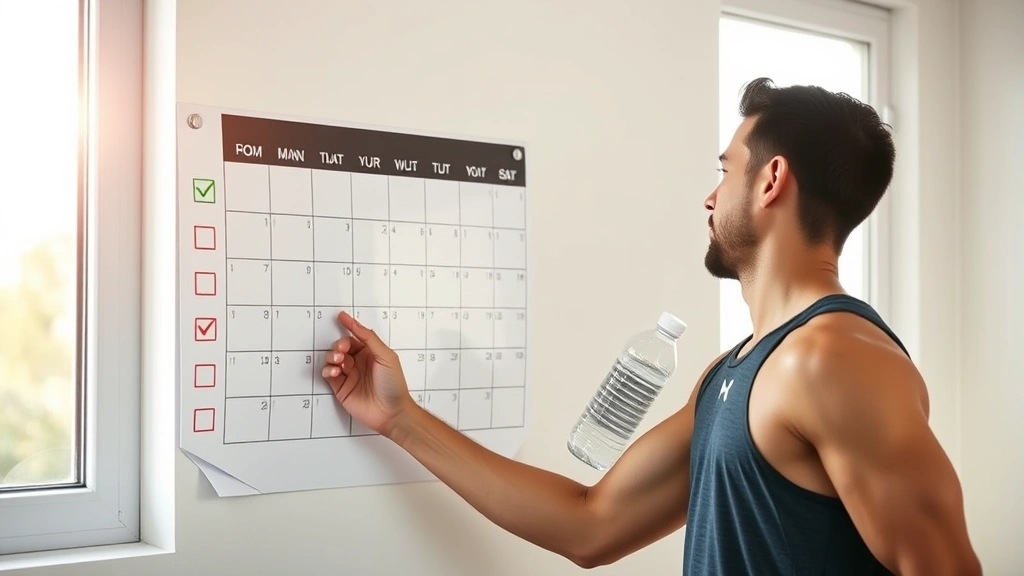
Tracking matters too, but not obsessively. A simple calendar where you mark off days you completed your habit works better than tracking metrics. You’re rewarding yourself for showing up, not for perfect execution.
Overcoming Common Obstacles
Let’s address the real blockers people face.
“I don’t have time.” You have time for things you prioritize. But you might not need to prioritize a 90-minute gym session. What if your habit was 15 minutes? That’s realistic. Work your way up as the habit solidifies.
“I’m too tired.” Exercise actually gives you energy—but not immediately. You might feel tired before a workout and energized after. Understanding this helps you push through the initial resistance. Also, check your sleep and recovery habits—fatigue is often a signal you need better sleep, not that you should skip exercise.
“I keep getting injured.” This usually means you’re doing too much too fast or your form is off. Work with a coach or physical therapist. The goal is sustainable, not heroic. An injury that sidelines you for months kills your habit faster than starting small ever will.
“I lose motivation.” Motivation is overrated. Habits don’t require motivation—they require cues and rewards. You don’t feel motivated to brush your teeth, but you do it because it’s automatic. Build your fitness habit the same way.
“I feel bored.” Variety matters for engagement, but not early on. Stick with one routine for at least four weeks before changing it. Your brain needs repetition to automate the behavior. Once it’s a true habit, you can vary it more.
Tracking Progress Without Obsession
Tracking is powerful for habit formation—it makes progress visible and gives you immediate feedback. But obsessive tracking can become counterproductive. You don’t need to measure everything.
Start with simple tracking:
- Did you do the habit? Yes or no. Mark it on a calendar.
- How’d you feel? Energy level, mood, soreness. One-word notes.
- What helped? What hindered? Brief notes for patterns.
Once your habit is solid (after 8-12 weeks), you can add metrics if you want: times, distances, weights, reps. But early on, keep it simple. The goal is reinforcement, not data overload.
Many people find that tracking strength training progress is particularly motivating because you can literally see yourself getting stronger. That’s a powerful reward signal. Other people find that tracking workouts completed is enough.
” alt=”Diverse group of people of various ages and fitness levels working out together in bright, welcoming gym environment”>
FAQ
How long does it take to build a fitness habit?
Research suggests 66 days on average, but it varies. Some habits solidify in 21 days; others take 254 days. The key is consistency, not time. If you miss several days in a row, you’re essentially starting over. Focus on showing up regularly rather than hitting a magic number of days.
Should I track calories or just focus on working out?
For habit formation, focus on one behavior at a time. If you’re building a workout habit, don’t simultaneously overhaul your diet. Once working out feels automatic, you can layer in nutrition habits. Trying to do both at once is a common reason people fail.
What if I miss a workout?
You’re human. Missing one workout doesn’t break a habit. Get back to it the next scheduled day. If you miss more than one in a row, you need to troubleshoot: Was it too hard? Was the cue unclear? Was the reward not satisfying? Adjust and restart.
Is it better to work out at home or at a gym?
Whichever you’ll actually do consistently. Some people thrive with home workouts because there’s no friction. Others need the gym environment for accountability and separation from home distractions. Test both and pick the one where you’re more likely to show up.
Can I build multiple fitness habits at once?
Not really. Pick one—either a workout routine or a nutrition habit or a sleep habit. Build that for 8-12 weeks until it feels automatic. Then layer in the next one. This prevents overwhelm and increases your success rate significantly.
What should my reward be?
Something immediate and satisfying. A favorite smoothie, a few minutes of a podcast you love, a cold shower, checking off a calendar, a text to a friend. The reward should reinforce the behavior and feel good in the moment. It doesn’t need to be food-related.
Building fitness habits that stick isn’t mysterious. It’s about starting small, making your environment work for you, understanding how your brain works, and being consistent without being rigid. You’ve got this—and you don’t need to do it perfectly to do it successfully.


