
The Complete Guide to Building Sustainable Fitness Habits That Actually Stick
Let’s be honest—you’ve probably started a fitness routine before. Maybe you crushed it for three weeks, felt amazing, then life got busy and suddenly you’re back to square one. That’s not a failure on your part; it’s just how our brains work. Building sustainable fitness habits isn’t about willpower or motivation; it’s about creating systems that work with your life, not against it. In this guide, we’re breaking down exactly how to build habits that last, backed by science and real-world experience.
The truth is, most people approach fitness like an all-or-nothing sprint when they should be thinking about it as a marathon. We’re going to explore the psychology behind habit formation, practical strategies you can implement today, and how to bounce back when you stumble—because you will, and that’s completely normal.
Understanding How Fitness Habits Form
Before we dive into the how-to, let’s talk about the why. Your brain loves efficiency. It’s constantly looking for ways to automate behaviors so it doesn’t have to think about them. This is where habits come in. According to research on habit formation published in PubMed, it takes an average of 66 days for a behavior to become automatic, though this varies widely depending on the person and the complexity of the habit.
The key insight? Your brain doesn’t distinguish between “good” and “bad” habits—it just recognizes patterns. When you repeat a behavior in the same context, your brain starts to automate it. This is why gym-goers who always hit the gym at 6 AM find it easier to stick with their routine than those who try to squeeze workouts in whenever they can.
Understanding this neurological foundation helps you design habits strategically. You’re not fighting your brain; you’re working with it. When you establish a consistent time, location, and trigger for your workouts, you’re essentially programming your brain to expect and crave that activity.
The Basics of Habit Building
There’s a framework that fitness professionals and behavioral psychologists use called the habit loop, and it’s genuinely game-changing. It consists of three parts: the cue (or trigger), the routine (the behavior itself), and the reward. Let’s break each down:
- Cue: This is what prompts the behavior. It could be your alarm going off at 6 AM, finishing breakfast, or even your gym bag sitting by the door. The more specific and consistent your cue, the better. Instead of “I’ll work out when I feel like it,” try “I work out every Monday, Wednesday, and Friday at 6:30 AM.”
- Routine: This is the actual behavior—your workout, your meal prep, your stretching session. Start small here. If you’ve never worked out before, commit to 15 minutes, not an hour. Small wins build momentum.
- Reward: This is what your brain gets from the behavior, and it’s crucial. The reward doesn’t have to be food or money; it can be the endorphin rush, the sense of accomplishment, or even just checking off a box on your calendar. Your brain needs to associate the behavior with something positive.
When you understand this loop, you can manipulate it to your advantage. Let’s say your goal is to establish a consistent workout routine. Your cue might be laying out your gym clothes the night before. Your routine is your 30-minute workout. Your reward could be a post-workout smoothie, a few minutes of your favorite podcast, or simply the satisfaction of marking it off your calendar.
Practical Strategies for Success
Now that you understand the theory, let’s get tactical. Here are proven strategies that actually work:
Start Stupid Small
Seriously. If you want to build a daily exercise habit and you’ve been sedentary, don’t commit to an hour at the gym. Commit to 10 minutes. Or even 5 minutes of movement. Your goal here isn’t to get fit in two weeks; it’s to build the neural pathway that says “I’m someone who exercises.” Once that identity sticks, scaling up becomes natural.
Stack Your Habits
One of the most effective techniques is habit stacking, where you attach a new habit to an existing one. For example: “After I pour my morning coffee, I’ll do 10 minutes of stretching.” Or “After I finish lunch, I’ll go for a 15-minute walk.” This works because you’re leveraging an established habit as the trigger for the new one. It’s much easier to remember your new habit when it’s anchored to something you already do automatically. Learn more about stretching and flexibility routines to maximize these micro-workouts.
Remove Friction
Make the desired behavior as easy as possible. If you want to work out in the morning, sleep in your gym clothes (okay, maybe not literally, but pack them the night before). If you want to meal prep, buy pre-cut vegetables. If you want to drink more water, keep a water bottle on your desk. Every tiny bit of friction you remove makes it more likely you’ll follow through.
Add Friction to Competing Behaviors
Conversely, make undesired behaviors harder. If you tend to scroll on your phone instead of working out, put it in another room. If you mindlessly snack, don’t keep junk food visible in your kitchen. You’re not relying on willpower; you’re relying on design.
Track Visibly
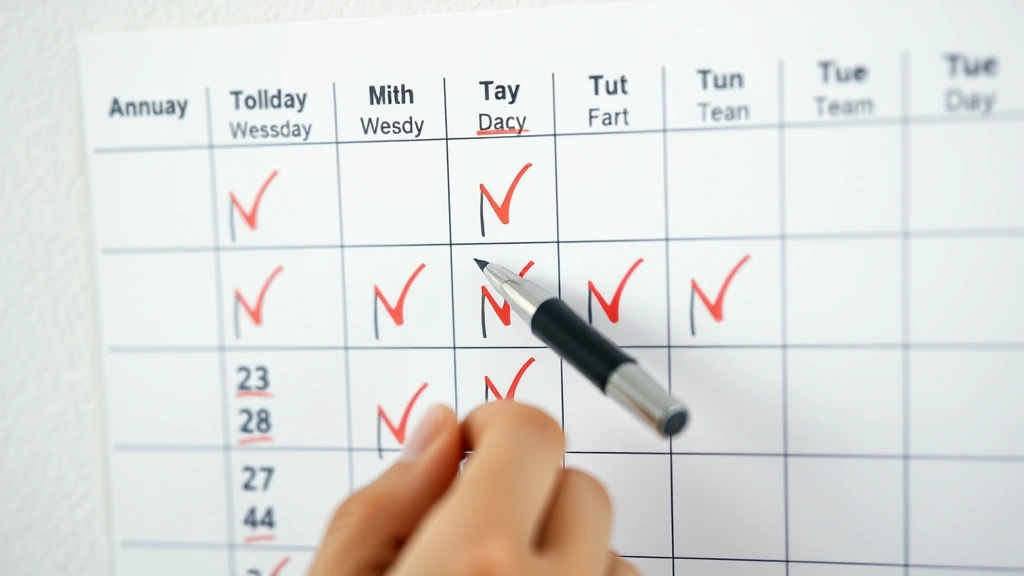
There’s something powerful about seeing your progress. Whether it’s a calendar where you mark off each day you worked out or a simple spreadsheet, visible tracking creates accountability and motivation. The “don’t break the chain” method—where you mark each day you complete a habit and try not to miss two days in a row—is surprisingly effective.
Connecting Nutrition to Your Habit Stack
Here’s something many people miss: your fitness habits don’t exist in a vacuum. They’re deeply connected to your nutrition habits, sleep habits, and stress management. If you’re building a workout habit but your nutrition is all over the place, you’re making it harder on yourself.
Start by establishing what we call a “keystone habit”—one habit that tends to trigger other positive behaviors. For many people, this is regular exercise. When you exercise consistently, you’re more likely to eat better, sleep better, and manage stress more effectively. It’s not magic; it’s just how our habits reinforce each other.
That said, if you’re struggling with both fitness and nutrition, consider starting with nutrition. It’s often easier to build a meal prep habit (which you can do once a week) than to establish a daily workout routine. Once you’ve got that foundation, adding structured workouts becomes easier. Explore meal prep strategies that complement your fitness goals and fit your lifestyle.
The connection goes deeper too. When you understand how nutrition fuels your workouts according to Mayo Clinic, you’re more motivated to eat intentionally. You’re not eating well because you “should”; you’re eating well because you want your workouts to be effective.
Why Recovery Matters More Than You Think
This is where a lot of people sabotage themselves. They build a solid workout habit, then wonder why they’re not seeing results or why they keep getting injured. The answer? They’re neglecting recovery, and recovery is when the actual adaptation happens.
Recovery includes sleep, active recovery days, stretching, and even managing stress. When you’re building fitness habits, make recovery part of your habit stack. This might mean:
- Setting a consistent bedtime (yes, this is a habit you can build)
- Scheduling active recovery days into your workout routine
- Incorporating mobility and flexibility work into your daily routine
- Creating a stress-management habit—whether that’s meditation, journaling, or just taking walks
The science is clear: the American College of Sports Medicine recommends recovery as a critical component of any training program. Your muscles don’t grow during the workout; they grow when you’re resting. Your nervous system doesn’t recover during exercise; it recovers when you’re sleeping and managing stress.

Measuring Progress Beyond the Scale
Here’s a truth that’ll change your perspective: the scale is a terrible measure of fitness progress, especially early on. Muscle weighs more than fat, so you might be getting stronger and more fit while the number stays the same or even increases.
Instead, track metrics that actually matter:
- Consistency: How many times did you work out this week? This is the single best predictor of long-term success.
- Performance: Can you do more reps, lift heavier weight, or go faster than you could last month? This is objective progress.
- How you feel: Do you have more energy? Better sleep? Improved mood? These are real, meaningful changes.
- Measurements: Take body measurements or progress photos. These often show changes the scale doesn’t.
- Clothes fit: Sometimes the best indicator is that your jeans fit differently.
When you track these things, you stay motivated even when the scale isn’t moving. And more importantly, you’re reinforcing the habit loop because you’re seeing concrete evidence that your behavior is working.
FAQ
How long does it really take to build a fitness habit?
While research suggests an average of 66 days, the truth is it depends. Simple habits like taking a daily walk might take 3-4 weeks. Complex habits like establishing a structured strength training routine might take 2-3 months. The key is consistency, not perfection. Missing one day isn’t failure; missing multiple days is a pattern.
What if I keep falling off track?
First, don’t beat yourself up. Everyone does. Second, look at your habit loop. Did you lose your cue? Did the routine become too hard? Is the reward not satisfying? Usually, when people fall off, it’s because one element of the loop broke down. Fix that element and you’ll get back on track. Also, consider whether you’re trying to do too much at once. Start smaller.
Should I focus on one habit or multiple habits at once?
Start with one. Build momentum with that habit—get it to feel automatic. Then add another. The temptation to overhaul everything at once is real, but it usually backfires. You have limited willpower, and spreading it thin means nothing sticks. One habit, done consistently, beats ten habits done sporadically every single time.
How do I stay motivated when results are slow?
This is where tracking non-scale progress becomes crucial. You need to see evidence that your habit is working, even if the big goal feels distant. Celebrate small wins. You worked out four times this week? That’s a win. You prepped meals on Sunday? That’s a win. Your body composition might take months to change, but your consistency can show results weekly.
What’s the best time to work out for habit formation?
The best time is the time you’ll actually do it. If you commit to 6 AM but you hate mornings, you won’t stick with it. If you say you’ll go after work but you’re always exhausted, that won’t work either. Experiment for a few weeks and find your natural rhythm. Once you find it, lock it in. Consistency matters more than the time itself.
Can I build fitness habits if I have an unpredictable schedule?
Yes, but you need to be flexible with your cue. Instead of “I work out at 6 AM,” try “I work out within two hours of waking up” or “I work out on Monday, Wednesday, and Friday at whatever time works that day.” The routine stays the same; the trigger just needs a bit more flexibility. You might also consider shorter, more flexible workouts like NASM-recommended quick routines that fit unpredictable schedules.


