
How to Build Lean Muscle Without Gaining Fat: The Science-Backed Strategy
You’ve probably heard it a hundred times: “You can’t build muscle and lose fat at the same time.” Well, that’s not entirely true—and I’m here to break down exactly how to do it without driving yourself crazy with conflicting goals.
The truth is, most people swing between two extremes. They either eat in a massive surplus and gain a ton of fat alongside muscle, or they cut so aggressively that they lose hard-earned muscle tissue. There’s a middle ground, and it’s not as complicated as fitness influencers make it seem. It comes down to understanding how your body actually works, being strategic with your nutrition, and staying consistent with intelligent training.
If you’re tired of the all-or-nothing approach and ready to build the physique you actually want, this guide’s for you.
Understanding Caloric Balance and Body Composition
Here’s the fundamental truth that changes everything: body composition isn’t just about calories in versus calories out. It’s more nuanced than that, but calories still matter—they’re just not the whole story.
When you’re trying to build lean muscle without fat gain, you’re aiming for what’s called a “lean bulk” or “body recomposition.” This means eating slightly above maintenance (maybe 300-500 calories more per day) while training hard and getting enough protein. Your body can actually use that surplus to build muscle instead of storing it as fat, especially if you’re strategic about it.
The key difference between gaining lean muscle and gaining fat comes down to nutrient partitioning—basically, where your body decides to store that excess energy. If you’re training hard, eating enough protein, and not going overboard with the surplus, your body’s more likely to direct those calories toward muscle building rather than fat storage.
But here’s what most people miss: you don’t need a massive surplus. In fact, a smaller surplus combined with proper training is often better for building lean muscle. You’ll build muscle slower, but you’ll build it cleaner. Think of it like the difference between rushing a construction project and doing it right the first time.
If you want to dive deeper into how your body actually processes nutrients, check out our guide on how to calculate your maintenance calories and understanding macro ratios for muscle building. These aren’t just numbers—they’re the foundation of your strategy.
Protein: Your Secret Weapon
Let’s be real: if there’s one thing that separates people who build lean muscle from people who don’t, it’s protein intake. I’m not saying this to sell you protein powder (though that stuff can help)—I’m saying it because the science is overwhelming.
Your muscles are made of protein. When you train, you create micro-tears in muscle fibers. Your body repairs those tears and builds them back stronger, but it can only do that if you have enough amino acids available. Without adequate protein, your body literally can’t build new muscle tissue efficiently, no matter how hard you train.
The sweet spot for muscle building is around 0.7-1 gram of protein per pound of body weight per day. If you weigh 180 pounds, that’s roughly 130-180 grams daily. This sounds like a lot, but it’s actually pretty manageable when you plan it out.
Here’s the practical breakdown:
- Breakfast: Eggs, Greek yogurt, or cottage cheese (20-30g protein)
- Snack: Protein shake or meat-based snack (20-30g)
- Lunch: Chicken, fish, or lean beef with carbs (30-40g)
- Snack: Protein bar or nuts (10-15g)
- Dinner: Salmon, turkey, or steak (30-50g)
The beauty of hitting your protein target is that it naturally helps with the caloric surplus piece too. Protein is more satiating than carbs or fat, meaning you’ll feel fuller longer. This makes it easier to stick to your nutrition plan without feeling deprived.
If you’re struggling to hit protein targets through whole foods alone, that’s where supplementation comes in. We’ll dive deeper into that, but for now, know that choosing the right protein sources and timing your protein intake are both important pieces of the puzzle.
” alt=”Lean protein sources like grilled chicken breast, salmon fillet, and eggs arranged on a clean white plate with fresh vegetables”/>
Training Strategy for Lean Gains
You can’t build muscle without resistance training. That’s non-negotiable. But here’s where a lot of people mess up: they think more volume and more intensity automatically means more muscle gain. It doesn’t.
For lean muscle building, you want to focus on progressive overload with compound movements. These are exercises that work multiple muscle groups at once: squats, deadlifts, bench presses, rows, and overhead presses. They’re more efficient than isolation exercises for building muscle and burning calories simultaneously.
A solid training split for lean gains looks something like this:
- Day 1 (Lower Body): Squats, Romanian deadlifts, leg press, leg curls
- Day 2 (Upper Body Push): Bench press, incline dumbbell press, overhead press, tricep work
- Day 3 (Rest or Light Activity): Walking, stretching, mobility work
- Day 4 (Upper Body Pull): Deadlifts, barbell rows, lat pulldowns, barbell curls
- Day 5 (Full Body): Mix of compound movements with moderate weight
The goal isn’t to go all-out every single session. Instead, you’re focusing on sustainable intensity—lifting heavy enough to challenge your muscles, but not so heavy that you’re constantly beat up and unable to recover. This is where a lot of lean bulk strategies fail. People train like they’re prepping for a bodybuilding show, then wonder why they’re gaining fat.
Research from the American College of Sports Medicine suggests that training 3-4 times per week with proper intensity and volume is optimal for muscle growth while maintaining a lean physique. More isn’t always better.
Progressive Overload Without the Bulk
Progressive overload is the engine that drives muscle growth. It’s the principle of gradually increasing the demands you place on your muscles over time. Without it, your body has no reason to build new muscle tissue.
But here’s the misconception: progressive overload doesn’t just mean adding weight to the bar every week. There are multiple ways to progress:
- Adding weight: The most obvious method, but not always sustainable
- Adding reps: If you did 8 reps last week, aim for 9 this week
- Adding sets: More total volume stimulates growth
- Decreasing rest periods: Shorter breaks between sets increases metabolic stress
- Improving range of motion: Going deeper on squats or getting a better stretch on rows
- Improving form: Better mind-muscle connection with the same weight
The key is being patient and consistent. You don’t need to add 5 pounds to your lifts every week. In fact, that’s usually a sign you’re not really challenging yourself. Aim for small, incremental improvements—adding a rep or two per week, or adding 2-5 pounds per month. This approach builds muscle steadily without requiring massive caloric surpluses.
For a detailed breakdown of how to structure your progression, check out our guide on periodizing your training for consistent gains.
Nutrition Timing and Meal Planning
There’s a lot of hype around meal timing—the “anabolic window,” pre-workout nutrition, post-workout carbs, etc. Some of it’s legitimate, most of it’s overblown. Here’s the truth: total daily intake matters way more than timing.
That said, there are some practical guidelines that can help:
Pre-workout (1-2 hours before): A meal with carbs and protein, moderate fat. This fuels your training and provides amino acids for muscle preservation during your workout. Think chicken and rice, or a turkey sandwich.
Post-workout (within a few hours): Protein and carbs to support recovery. Your muscles are primed to absorb nutrients after training, so this is a good time to eat a solid meal. But don’t stress if you can’t eat immediately—the “anabolic window” isn’t as narrow as supplement companies want you to believe.
Throughout the day: Spread your protein intake across 4-5 meals. This isn’t magical, but it helps keep you satiated and ensures consistent amino acid availability.
For a complete breakdown of meal planning strategies for muscle building and managing carbs for lean gains, we’ve got detailed guides that break it down even further.

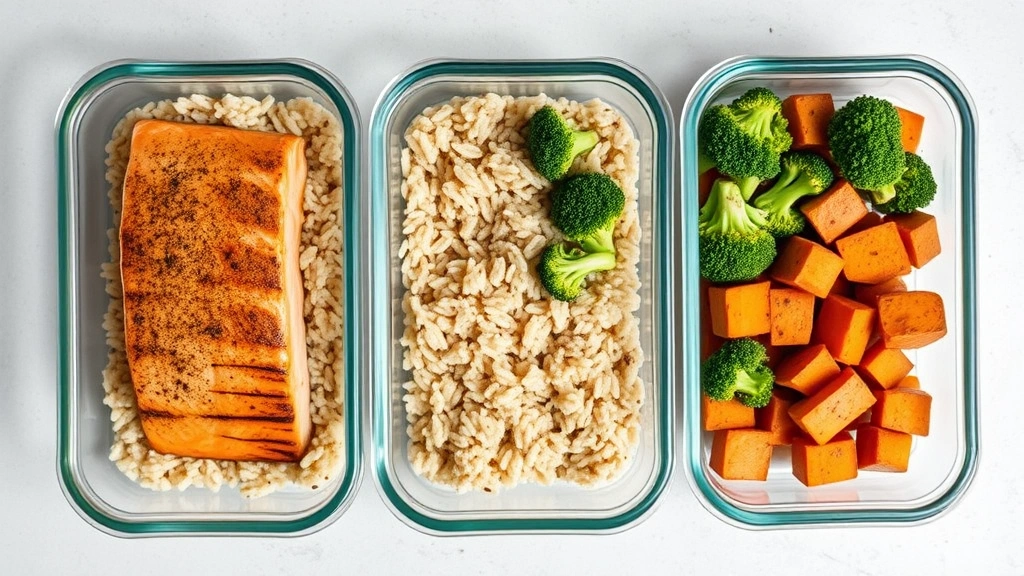
” alt=”Colorful meal prep containers with grilled salmon, brown rice, steamed broccoli, and sweet potato arranged in organized compartments”/>
Smart Supplementation Choices
Let’s be clear: supplements are not magic. But some of them are actually backed by solid science and can help you reach your goals a bit faster.
The supplements that have real evidence behind them for muscle building:
- Protein powder: Convenient way to hit your daily protein target. Whey is most common and well-researched.
- Creatine monohydrate: One of the most studied supplements ever. It helps with strength and muscle gain, and it’s cheap.
- Caffeine: Improves workout performance and focus. Coffee works just fine.
- Beta-alanine: May help with endurance during higher rep ranges.
The supplements that don’t have strong evidence:
- Most pre-workout formulas (mostly caffeine with a bunch of other stuff)
- Testosterone boosters (if they actually worked, they’d be illegal)
- Fat burners (your caloric deficit does the work, not the supplement)
Don’t fall into the trap of thinking supplements are what’ll transform your physique. They’re tools that support a solid diet and training program, nothing more. Focus on nailing the fundamentals first.
To learn more about evidence-based supplementation, check out the National Academy of Sports Medicine guidelines and research on PubMed for peer-reviewed studies.
Recovery and Sleep Matter More Than You Think
Here’s something that doesn’t get nearly enough attention: you don’t build muscle in the gym. You build it when you’re resting.
Your workout is the stimulus. It tells your body, “Hey, we need to build muscle.” But the actual building happens during recovery—especially during sleep. This is when your body releases growth hormone, repairs muscle tissue, and consolidates the adaptations from your training.
If you’re sleeping 5-6 hours per night while trying to build lean muscle, you’re shooting yourself in the foot. Aim for 7-9 hours consistently. This isn’t lazy—it’s essential.
Beyond sleep, recovery includes:
- Stress management: High cortisol (stress hormone) can interfere with muscle building
- Active recovery: Light walking, stretching, or yoga on rest days
- Proper hydration: Dehydration impairs performance and recovery
- Mobility work: Keeps your joints healthy and improves movement quality
Think of recovery as part of your training program, not something separate. It’s just as important as the weights you lift.
FAQ
How long does it take to build lean muscle without gaining fat?
Realistic timeline: 8-12 weeks to see noticeable changes if you’re consistent with training and nutrition. Building muscle is a slow process—expect to gain 0.5-1 pound of muscle per week in optimal conditions. The leaner your approach, the slower the process, but the cleaner the results.
Can beginners build lean muscle faster than experienced lifters?
Yes. Beginners experience what’s called “newbie gains”—accelerated muscle growth in the first 6-12 months of training due to neural adaptations and the stimulus being entirely new to their body. After that, the rate of progress slows down. This is why starting with solid fundamentals matters.
Is cardio bad for building lean muscle?
Not at all. Light to moderate cardio (150-300 minutes per week) doesn’t interfere with muscle building and actually helps with recovery and body composition. Just don’t do excessive cardio (like training for a marathon) while trying to build muscle—that creates too much of a caloric deficit.
What if I’m not seeing progress after 4 weeks?
Four weeks is too short to judge progress. Give it at least 8 weeks. But if you’re not seeing anything after that, evaluate: Are you actually in a slight surplus? Are you hitting your protein targets? Are you progressively overloading? Are you sleeping enough? One of these is probably the culprit.
Should I track my macros obsessively?
Not obsessively, but awareness helps. You don’t need a food scale and a tracking app for every meal, but knowing roughly how much protein, carbs, and fat you’re eating gives you useful feedback. Track for a week or two just to see where you stand, then adjust accordingly.
How do I know if I’m gaining too much fat?
Take progress photos and measurements. The scale will go up, but if your waist is staying stable or growing slowly while your lifts are increasing, you’re on track. If your waist is growing faster than your lifts, you might be in too much of a surplus.


