
The Complete Guide to Building Muscle on a Budget: Real Strategies That Actually Work
Let’s be honest—building muscle doesn’t require a $200/month gym membership or fancy supplements that promise the world. I’ve seen people transform their physiques in home gyms with dumbbells and determination, and I’ve also seen folks spend thousands without getting results. The difference? Strategy, consistency, and understanding what actually matters.
You don’t need to be rich to be strong. What you need is a solid plan, the right information, and the willingness to show up even when it’s not glamorous. This guide breaks down exactly how to build muscle without breaking the bank, from nutrition to training to recovery.
Nutrition: The Foundation of Muscle Growth
Here’s the thing nobody wants to hear: you can’t out-train a bad diet, and you definitely can’t build muscle without eating enough. But “eating enough” doesn’t mean spending a fortune. It means being intentional about calories and protein.
When you’re building muscle on a budget, your nutrition strategy becomes even more critical. You’re working with limited resources, so every meal needs to count. Start by calculating your daily caloric needs—most people building muscle need roughly 16-18 calories per pound of body weight. So if you weigh 180 pounds, you’re looking at roughly 2,900-3,200 calories daily.
The breakdown matters too. Aim for about 0.8-1 gram of protein per pound of body weight. That 180-pound person needs 144-180 grams of protein daily. This sounds intimidating until you realize how affordable protein actually is when you skip the marketing.
Your macronutrient split should look something like: 30-35% protein, 40-50% carbs, and 15-20% fat. This ratio supports muscle growth without requiring specialty foods or expensive meal prep services.
Affordable Protein Sources That Pack a Punch
This is where budget muscle-building gets real. You don’t need grass-fed steak or organic chicken breast. You need any protein source you’ll actually eat consistently.
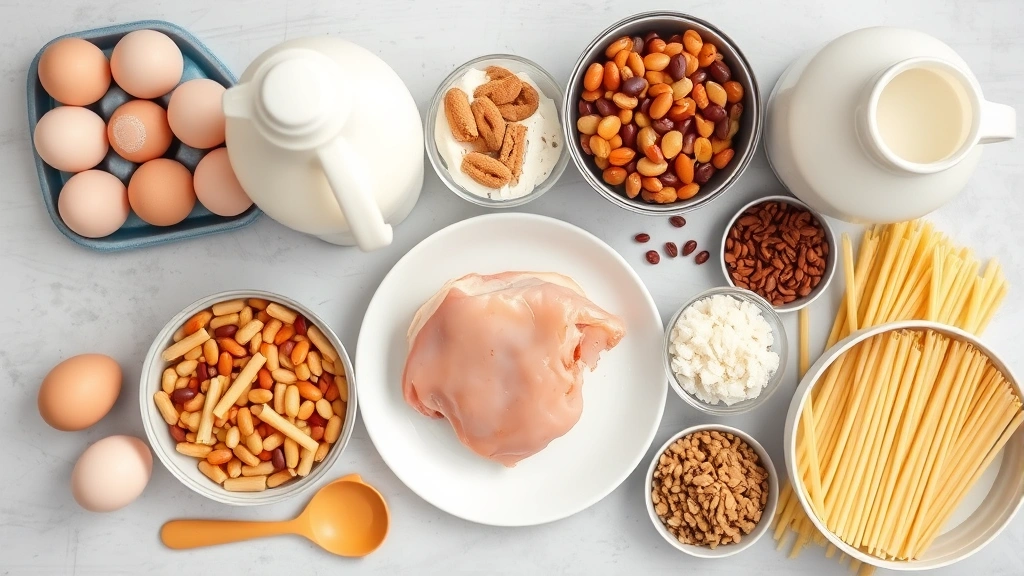
Eggs remain the gold standard for budget protein. A dozen eggs costs about $2-3 and provides roughly 72 grams of protein plus all nine essential amino acids. Boil them, scramble them, throw them in fried rice—doesn’t matter. Your muscles don’t care about the cooking method.
Canned tuna and salmon are ridiculously affordable and shelf-stable. A can runs 50-75 cents and delivers 20+ grams of protein. Mix it with rice, pasta, or potatoes for a complete meal that costs under $2 total.
Chicken thighs are cheaper than breasts and honestly more flavorful. Ground turkey, pork shoulder, and beef chuck roast all work. Buy on sale, freeze it, and you’ve got protein sorted for weeks.
Don’t sleep on Greek yogurt, cottage cheese, and regular milk. A gallon of milk costs $3-4 and has roughly 32 grams of protein. Overnight oats with milk and Greek yogurt become a protein-packed breakfast for pennies.
Beans, lentils, and chickpeas complete the picture. A pound of dried beans costs 50 cents and makes multiple servings. They’re not complete proteins on their own, but combined with rice or other grains, they create all essential amino acids. Your wallet and your muscles will thank you.
Check out our guide on optimizing protein intake for muscle growth for more detailed strategies on timing and quantities.
Training Without Fancy Equipment
You don’t need a $3,000 home gym setup. Honestly, you don’t even need a gym membership, though they’re often worth it for the cost. Here’s what actually builds muscle: progressive tension over time.
Resistance training causes muscle damage. Your body repairs it bigger and stronger. That happens whether you’re using a $200 barbell or a gallon of milk and some ingenuity.
If you have access to a gym, great—start with a solid beginner strength training program that focuses on compound movements. Squats, deadlifts, bench press, rows, and overhead press. These movements work multiple muscle groups simultaneously and deliver the most return on your training investment.
No gym access? Bodyweight training works. Push-ups, pull-ups (find a bar—playground, doorway, tree branch), pistol squats, handstand holds, and dips on a chair all build serious muscle. The limiting factor becomes progression—you need to continuously increase difficulty.
Resistance bands are cheap ($20-40 for a set) and surprisingly effective. They create constant tension throughout the movement, which is actually advantageous for hypertrophy. Combine bands with bodyweight and you’ve got a legitimate training system.
Dumbbells are the sweet spot for budget training. A pair of adjustable dumbbells costs $100-150 and handles nearly every exercise. Alternatively, fill backpacks with books or sand for weighted carries and squats. Get creative—water jugs, cinder blocks, whatever creates resistance.
The key is following a structured program. Random exercises don’t build muscle efficiently. Pick a legitimate strength training routine for beginners designed around your equipment and follow it for at least 8-12 weeks before changing anything.
Progressive Overload on Any Budget
Progressive overload is the non-negotiable principle of muscle building. Your muscles adapt to stress. If you do the same thing forever, you stop growing. You must continuously increase the challenge.
With expensive equipment, this is easy—add another 5-pound plate. On a budget, you get creative.
Add reps. If you did 10 push-ups last week, do 11 this week. Sounds small, but it adds up. When you hit 15-20 reps easily, progress to a harder variation.
Add sets. Do an extra set each week until you hit 4-5 sets. Then reduce back to 3 and add weight or difficulty.
Improve form and range of motion. Going deeper on squats, getting full chest-to-ground on push-ups, and achieving complete range of motion increases the stimulus without adding weight.
Decrease rest periods. Doing the same work in less time increases intensity. Drop from 90 seconds to 75 seconds between sets.
Upgrade exercise difficulty. Can’t do pull-ups? Use resistance bands or a chair for assisted pull-ups. Master those, then remove assistance. Bodyweight training has an entire progression ladder—archer push-ups, diamond push-ups, pseudo planche push-ups—each harder than the last and completely free.
Track everything. Write down exercises, reps, sets, and how you felt. This simple practice reveals whether you’re actually progressing or just going through the motions.
Recovery and Sleep: The Free Superpowers
Here’s where budget training gets its biggest advantage: recovery doesn’t cost money, and most people ignore it anyway.
Muscle doesn’t grow in the gym. It grows during recovery when your body repairs the damage training creates. Without adequate recovery, you’re just accumulating fatigue.
Sleep is non-negotiable. Aim for 7-9 hours nightly. During sleep, your body releases growth hormone, consolidates muscle protein synthesis, and restores your nervous system. Poor sleep tanks testosterone, increases cortisol, and crushes motivation. It’s free and more powerful than any supplement.
The research is clear: studies on sleep and muscle growth consistently show that adequate sleep is as important as training itself.
Manage stress. Chronic stress elevates cortisol, which breaks down muscle tissue and promotes fat storage. Sounds dramatic, but it’s real physiology. Walks, meditation, time with friends, hobbies—whatever reduces your stress costs nothing and supports muscle growth.
Eat enough. Undereating is the fastest way to sabotage muscle growth. You need sufficient calories and protein to repair and build tissue. This ties back to our earlier nutrition discussion—prioritize whole foods and consistent eating patterns.
Active recovery matters too. Light activity on rest days (walks, easy movement) improves blood flow and reduces soreness without interfering with recovery. It’s free and feels good.
The Truth About Budget Supplements
Let’s talk about supplements because the marketing is aggressive and the budget is tight.
The only supplements with solid evidence for muscle building are: protein powder, creatine monohydrate, and caffeine. That’s it. Everything else is either minimally effective or completely unproven.
Protein powder is convenient and cost-effective. Whey protein powder costs roughly $0.50-1 per serving. It’s not magical—it’s just convenient protein. Whole foods work fine if you prefer them, but powder helps hit protein targets easily. It’s optional, not essential.
Creatine monohydrate is the most researched supplement in existence. ACSM research consistently shows it increases strength and muscle mass by about 1-3 pounds over 8-12 weeks when combined with training. It costs $10-15 for months of supply. If you’re on a budget, this is the one supplement worth considering.
Caffeine works—it improves focus, strength, and endurance. Coffee is cheap and effective. Skip the pre-workout drinks with 20 ingredients you can’t pronounce.
Multivitamins? Only if you’re deficient, which you probably aren’t if you’re eating reasonably varied foods. Omega-3s help with inflammation, but so does eating fish occasionally.
The reality: no supplement replaces training and nutrition. They’re additions, not foundations. Spend your money on food first, training access second, and supplements third—if at all.

FAQ
How much does it actually cost to build muscle on a budget?
Food costs roughly $200-300 monthly if you’re eating strategically. If you have gym access, that’s $10-50 monthly depending on your facility. If training at home, initial equipment investment is $100-200 one-time, then $0. Total monthly: $200-350. That’s cheaper than most hobbies.
How long before I see results?
Strength improvements happen within 2-3 weeks. Visible muscle changes take 8-12 weeks of consistent training and nutrition. Don’t expect overnight transformation, but expect noticeable progress within three months if you’re consistent.
Can I build muscle without a gym membership?
Absolutely. Bodyweight training, resistance bands, and improvised weights all work. You’ll progress slower than with a full gym, but progress is still possible. Consistency matters more than equipment.
Is expensive protein powder better than cheap protein powder?
Not really. Most protein powders contain similar ingredients. Buy based on taste, mixability, and price. Expensive doesn’t mean better—it usually means better marketing.
What if I can’t afford enough protein?
Prioritize eggs, beans, and milk. These are genuinely affordable. You can hit protein targets on $5-10 daily if you’re intentional. It’s possible without spending a fortune.
Should I take creatine?
It’s safe and effective, but not required. If you want an extra 1-3 pounds of muscle over 12 weeks and have $15 to spend, creatine monohydrate is worth it. If you’re broke, skip it and focus on training and eating.


