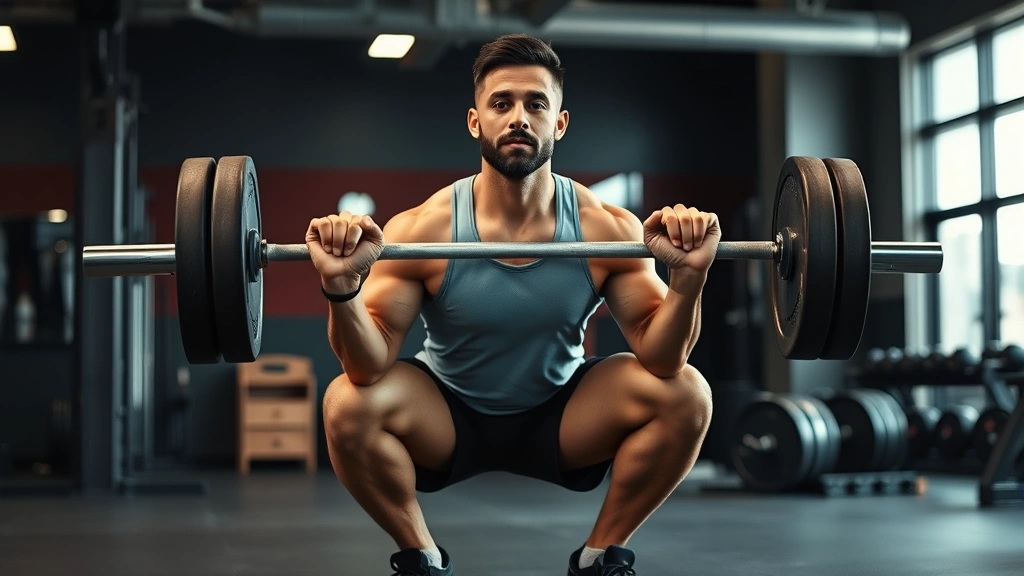
How to Build Muscle Without Going to the Gym: Your Complete Home Workout Guide
Look, I get it. The gym isn’t for everyone, and that’s totally okay. Maybe you’re busy, maybe you’re self-conscious, or maybe you just prefer working out in your living room with zero judgment. The good news? You absolutely can build serious muscle at home without fancy equipment or a gym membership. I’m talking real, noticeable strength gains and muscle growth that’ll make you feel stronger in your everyday life.
The fitness industry loves making you think you need a $200/month membership and a squat rack to get results. But here’s the truth: your body doesn’t care where the resistance comes from. Whether it’s a dumbbell, a resistance band, or your own bodyweight, progressive overload is what builds muscle. And you can nail that at home. Let me show you exactly how.
Understanding Resistance and Progressive Overload
Before we dive into exercises, let’s talk about the science. Muscle growth happens when you create tension in your muscles beyond what they’re used to handling. This is called progressive overload, and it’s non-negotiable for building muscle. Without it, your body adapts and growth plateaus.
Progressive overload doesn’t mean you need heavier weights every week. You can increase reps, decrease rest periods, improve form, add pause reps, or increase range of motion. All of these create the stimulus your muscles need to grow. When you’re training at home, you’ve actually got more flexibility with these variables than you might think.
The science is solid here. Research on resistance training mechanisms shows that mechanical tension, muscle damage, and metabolic stress all contribute to hypertrophy (muscle growth). You can trigger all three at home.
Essential Bodyweight Exercises for Muscle Building
Your bodyweight is a legitimate training tool. I know that sounds simple, but most people underestimate what they can achieve with just their body. The key is understanding how to progress and how to target different muscle groups effectively.
Push movements (chest, shoulders, triceps): Push-ups are your foundation. Start with standard push-ups, then progress to decline push-ups (feet elevated), archer push-ups, or pseudo planche push-ups. If regular push-ups are too hard, incline push-ups against a wall or couch are perfect for building strength. The progression path is clear: easier variations → standard → harder variations.
Pull movements (back, biceps): This is where most home workouts struggle. If you have a doorway pull-up bar (super cheap, like $20-30), you’ve got gold. Pull-ups and chin-ups are phenomenal for building back and arm muscle. If you don’t have a bar, inverted rows using a sturdy table work surprisingly well. Grab the edge, keep your body straight, and pull your chest to the table. Your back will feel this hard.
Leg movements (quads, hamstrings, glutes): Squats are incredible. Bodyweight squats, pistol squats (single-leg), jump squats, Bulgarian split squats (rear foot elevated on a couch)—these all build serious leg muscle. Add lunges, step-ups on a sturdy surface, and single-leg deadlifts, and you’ve got a complete leg program. Your legs are your largest muscle group, so don’t skip them just because you’re home.
Core: Planks, side planks, dead bugs, bird dogs, and hollow body holds all build core strength. A strong core supports every other movement and improves your everyday function.
Affordable Home Equipment That Actually Works
If you want to accelerate progress, minimal equipment opens up a lot of doors. You don’t need much—just strategic choices.
Resistance bands: These are honestly underrated. They’re cheap ($15-40 for a set), take up almost no space, and you can use them for nearly every exercise. Bands create accommodating resistance, meaning the resistance increases as you extend. This is actually great for muscle growth because you’re stronger at the end of the range of motion, where you can handle more tension.
Adjustable dumbbells: If you can swing it financially, adjustable dumbbells are the single best investment for home training. They let you do countless exercises—chest presses, rows, shoulder presses, curls, lateral raises—and you can progress by adding weight. A set of 5-50 lb adjustable dumbbells costs $200-400 but lasts forever. Compare that to a gym membership over five years.
Doorway pull-up bar: Seriously, just get one. $25, takes two minutes to install, and you unlock pull-ups and chin-ups. These are among the best back-building exercises you can do.
Suspension trainer or DIY rings: Gymnastic rings or a TRX-style trainer ($30-50) lets you do rows, dips, push-ups, and core work with adjustable difficulty. You can hang them from a pull-up bar or door anchor.
You don’t need all of this. Start with bands and a pull-up bar. That’s legitimately enough to build muscle for years.

” alt=”Person performing resistance band exercises at home in living room with motivational setup”>
Nutrition and Recovery: The Often-Forgotten Pillars
Here’s where a lot of people fail at home workouts. They train hard but eat like they’re not trying to build muscle. Nutrition matters just as much as the workout itself.
Protein: You need adequate protein to build muscle. Aim for 0.7-1 gram per pound of bodyweight daily. That’s not extreme—it’s just chicken, fish, eggs, Greek yogurt, cottage cheese, beans, or protein powder. If you’re eating enough protein at meals, you’re already halfway there.
Calories: You can’t build muscle in a caloric deficit (mostly). You need to eat enough to support muscle growth. This doesn’t mean eating garbage—it means eating whole foods in quantities that support your training. If you’re not seeing progress after 4-6 weeks, you’re probably not eating enough.
Sleep: Muscle actually grows during recovery, not during the workout. Sleep is when your body releases growth hormone and repairs muscle damage. Aim for 7-9 hours. This isn’t optional if you want results.
Consistency: One great workout means nothing. Consistency over months and years is what builds an impressive physique. A mediocre program done consistently beats a perfect program done sporadically every single time.
Building Your Home Workout Program
Let’s put this together into an actual program. Here’s a simple, effective approach for someone training at home with minimal equipment.
The Setup (3 days per week, alternating A/B):
Day A: Upper Body Push and Legs
- Push-ups or dumbbell bench press: 3 sets of 6-12 reps
- Dumbbell rows or inverted rows: 3 sets of 6-12 reps
- Dumbbell shoulder press or pike push-ups: 3 sets of 8-12 reps
- Goblet squats or bodyweight squats: 3 sets of 8-15 reps
- Planks: 3 sets of 30-60 seconds
Day B: Upper Body Pull and Legs
- Pull-ups or chin-ups (or resistance band pull-downs): 3 sets of 5-10 reps
- Dumbbell rows: 3 sets of 6-12 reps
- Lateral raises or band pull-aparts: 3 sets of 10-15 reps
- Bulgarian split squats or lunges: 3 sets of 8-12 reps per leg
- Dead bugs: 3 sets of 10 reps per side
Rest 60-90 seconds between sets. Pick a weight that’s challenging for the rep range. If you can do all reps easily, increase weight or reps next session.
This program hits every muscle group, allows for progressive overload, and takes about 30-40 minutes. Run it for 8-12 weeks, then change exercises or rep ranges to keep progressing. Your body adapts, so variation matters.
If you want more structure, check out our guide on creating an effective strength training program. Understanding periodization and progressive overload will level up your results even more. And if you’re also focused on fat loss, combining this with effective cardio without sacrificing muscle keeps you balanced.
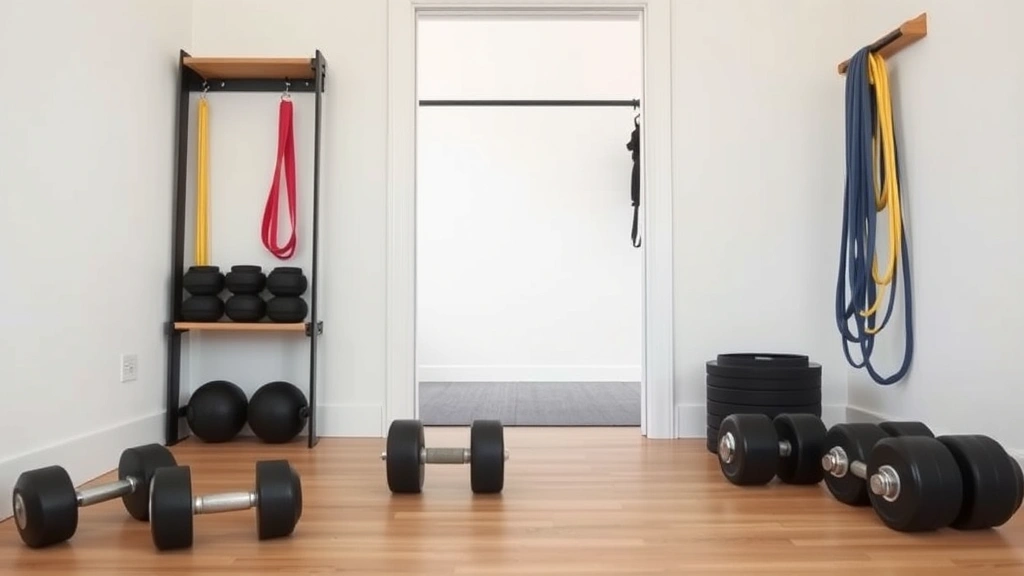
” alt=”Home gym setup with dumbbells, resistance bands, and pull-up bar in minimalist bedroom”>
Avoiding the Most Common Mistakes
Most people don’t fail because of lack of equipment. They fail because of these common mistakes:
Not eating enough: You can’t build muscle without adequate calories and protein. Period. If you’re not gaining weight or strength after a month, eat more.
Not progressing: Doing the same workout with the same weight forever won’t build muscle. You need to add reps, add weight, or decrease rest periods every week or two.
Skipping leg day: Your legs are huge muscle-building opportunity. Squats and lunges build muscle all over your body because they’re demanding and metabolically expensive. Don’t skip them because they’re hard.
Not training hard enough: You need to get close to failure. Your last rep should be tough. If you’re leaving tons of reps in the tank, you’re not creating enough stimulus for growth. Push yourself.
Inconsistency: Three months of perfect training beats six months of sporadic workouts. Build a habit. Put it on your calendar. Make it non-negotiable.
Neglecting recovery: Sleep, nutrition, and stress management matter. You can’t out-train a bad lifestyle. Prioritize sleep and whole foods.
For more on optimizing your training approach, check out our article on why muscles aren’t growing and how to fix it, which covers science-backed strategies from certified fitness professionals.
FAQ
Can you actually build significant muscle at home?
Absolutely. Muscle growth requires resistance and progressive overload, not a specific location. Thousands of people have built impressive physiques training entirely at home. The variables that matter—tension, progressive overload, nutrition, recovery—are completely achievable at home.
How long before you see results?
You’ll feel stronger within 2-3 weeks. Visible muscle growth typically takes 4-8 weeks of consistent training and proper nutrition. Be patient. Building muscle is a long game, but it compounds.
Do you need expensive equipment?
No. Bodyweight plus resistance bands and a pull-up bar is genuinely sufficient. Dumbbells accelerate progress, but they’re not required. Start with what you have and invest as you go.
How often should you train?
3-4 days per week is ideal for muscle building. This allows enough stimulus while giving muscles time to recover. More isn’t always better—recovery is where growth happens.
What if you’re sore after workouts?
Soreness (DOMS) is normal when starting, but it decreases as your body adapts. It’s not a requirement for muscle growth. You can build muscle without being sore. Focus on progressive overload and proper form instead.
Can you build muscle without protein powder?
Yes. Whole foods—chicken, fish, eggs, Greek yogurt, cottage cheese, beans, legumes—all provide protein. Powder is convenient and cost-effective, but it’s optional. If you’re eating enough whole-food protein, you’re fine.