
How to Build Muscle Without the Gym: Your Complete Home Workout Guide
Look, I get it. Between work, life, and everything else happening right now, finding time to commute to the gym feels impossible. Or maybe you’re just more comfortable working out at home where there’s no judgment, no waiting for equipment, and you can blast whatever music keeps you pumped. The good news? You absolutely don’t need a fancy gym membership to build real muscle and get stronger.
Building muscle at home is totally doable—and honestly, some people see better results because they’re consistent. No excuses about “the gym being closed” or “traffic was bad.” You’re literally steps away from your workout. In this guide, I’m breaking down everything you need to know to build muscle without leaving your living room, including what actually matters (spoiler: it’s not fancy equipment), how to structure your training, and how to fuel your body for growth.
The Science Behind Muscle Growth at Home
Here’s the reality: muscle grows when you create tension, damage muscle fibers slightly, and then let your body repair them bigger and stronger. That process doesn’t care whether you’re in a commercial gym or your bedroom. What matters is progressive overload—gradually increasing the challenge your muscles face.
When you lift weights (or use resistance), you’re creating micro-tears in muscle fibers. Your body responds by rebuilding those fibers thicker and stronger. This happens through a process called protein synthesis, where your body uses amino acids to construct new muscle tissue. The key variables are tension (how hard the muscle works), time under tension (how long it’s working), and metabolic stress (the burn you feel). You can absolutely achieve all three at home.
One study from the American College of Sports Medicine found that resistance training—regardless of whether it’s heavy weights or bodyweight with higher reps—produces similar muscle growth when taken close to failure. That’s huge for home training. It means your bodyweight squats, push-ups, and resistance band work count just as much as barbell training if you’re doing them right.
The biggest factor? Consistency and intention. You need to show up regularly (3-5 days per week for strength training) and actually challenge yourself. That’s the part people mess up. They do push-ups but never increase reps, add pauses, or change angles. No progression, no growth. We’ll fix that.
Essential Equipment (Minimal, Smart Choices)
You can build muscle with literally zero equipment—bodyweight training absolutely works. But a few strategic purchases make progression way easier and open up more exercise options. Here’s what’s actually worth buying:
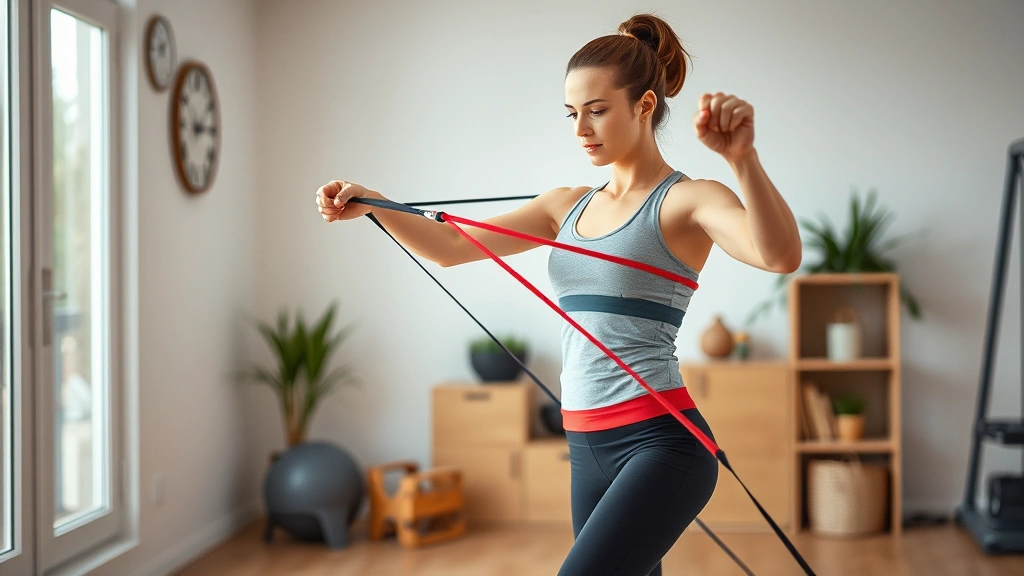
- Resistance bands (adjustable set, $20-40): These are game-changers. They provide variable resistance, travel easily, and let you modify exercises for different strength levels. Stack multiple bands for heavier resistance.
- Adjustable dumbbells or kettlebell ($50-150): If you can swing it budget-wise, one or two adjustable dumbbells give you options for exercises like rows, overhead presses, and curls. A single kettlebell works too.
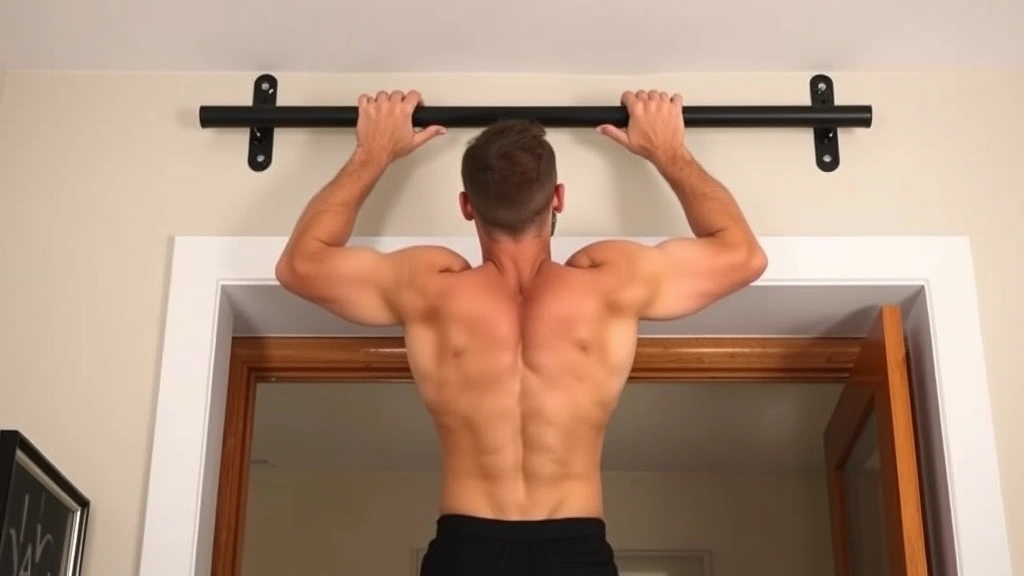
- Pull-up bar ($25-60): Doorway or wall-mounted. Pull-ups and rows are essential for balanced muscle development. If you can’t do them yet, resistance bands help you progress.
- Yoga mat or folded towels (optional): Comfort for floor work and stretching. Totally optional if you’ve got carpet.
That’s it. You don’t need leg press machines, cable systems, or fancy smart equipment. Those bands and one or two weights unlock 90% of the exercises you actually need for building muscle.
Progressive Overload Without Dumbbells
Here’s how you actually get stronger and build muscle at home without constantly buying heavier weights. Progressive overload is the principle of gradually increasing the demands on your muscles. Let me break down the methods:
Increase reps: Start with 3 sets of 8 push-ups. Next week, aim for 3 sets of 10. Week after, 3 sets of 12. Once you hit 12-15 reps comfortably, you move to a harder variation.
Add tempo (time under tension): Instead of doing regular push-ups, do 2-second lowering (eccentric), 1-second pause at the bottom, 1-second press up. This dramatically increases difficulty without changing the exercise. It’s one of the most underrated progression methods.
Change leverage/angle: Push-ups on flat ground → incline push-ups (hands on couch) → decline push-ups (feet elevated). Same movement pattern, increasing difficulty. Or single-leg squats, archer push-ups, or staggered-stance movements.
Add isometric holds: Do a set of push-ups, then hold the bottom position for 20-30 seconds. Your muscles are still working under tension, building strength and endurance.
Density training: Complete the same workout in less time. If you did 3 sets of 10 push-ups and 10 rows in 15 minutes last week, try to finish in 12 minutes this week. More work in less time = more stimulus.
Check out our complete guide to progressive overload for deeper strategies. The point is: you’ve got tons of ways to get harder without buying anything new.
Best Home Exercises for Muscle Building
These are the exercises that actually build muscle. Pick compound movements (they work multiple muscle groups) and do them consistently. Here’s the breakdown by muscle group:
Chest, shoulders, triceps: Push-ups (flat, incline, decline, diamond, archer), pike push-ups, dips (using a chair), resistance band chest presses, overhead presses with dumbbells or bands.
Back, biceps: Pull-ups or assisted pull-ups with bands, inverted rows (under a table), resistance band rows, reverse snow angels (on the floor), dead bugs with resistance.
Legs: Bodyweight squats, split squats, Bulgarian split squats (rear foot elevated), single-leg squats (pistol squats or assisted versions), lunges, calf raises, glute bridges, step-ups on stairs.
Core: Planks (front, side, with leg lifts), dead bugs, bird dogs, pallof presses with resistance bands, ab wheel rollouts (if you have one).
The magic is in consistency and quality. Five solid exercises done perfectly, three times per week, beats 15 exercises done half-heartedly. Pick 4-6 movements per session and own them.
Sample Home Workout Program
Here’s a real program you can start this week. It’s designed around progressive overload and takes 30-45 minutes per session. Do this 3-4 times per week, alternating between workouts or doing upper/lower splits.
Full-Body Workout A (Monday/Thursday):
- Squats or split squats: 3 sets of 10-12 reps
- Push-ups: 3 sets of 8-12 reps (pick your variation)
- Inverted rows or resistance band rows: 3 sets of 8-12 reps
- Lunges: 3 sets of 10 reps per leg
- Plank hold or dead bugs: 3 sets of 30-45 seconds or 12 reps
Full-Body Workout B (Tuesday/Friday):
- Glute bridges or single-leg glute bridges: 3 sets of 12-15 reps
- Pike push-ups or shoulder presses: 3 sets of 8-12 reps
- Pull-ups or assisted pull-ups: 3 sets of 5-10 reps
- Bulgarian split squats: 3 sets of 10 per leg
- Pallof press with resistance band: 3 sets of 12 per side
Rest 60-90 seconds between sets. Each week, try to add 1-2 reps, reduce rest time, or increase tempo. That’s progression. That’s how you build muscle.
Want more structure? Our detailed beginner strength training guide covers periodization and how to structure longer programs. You can also explore how to create a balanced workout routine that hits all your goals.
Nutrition and Recovery at Home
Building muscle requires three things: training stimulus, recovery, and nutrition. You can crush the training at home, but if you’re not eating right and sleeping, you won’t see results.
Protein intake: Aim for 0.7-1 gram of protein per pound of body weight daily. That’s roughly 140-180 grams for a 200-pound person. Doesn’t have to be fancy—chicken, eggs, Greek yogurt, cottage cheese, canned tuna, beans, lentils. Home cooking makes this easy because you control portions.
Calorie surplus (if gaining) or maintenance (if recomping): To build muscle, you generally need enough calories to support growth. A modest surplus of 300-500 calories above maintenance works. If you’re also losing fat, maintenance calories with high protein works too. Our nutrition and recovery guide breaks this down in detail.
Sleep: This is where the actual growth happens. Aim for 7-9 hours nightly. Muscle protein synthesis increases during sleep, and hormones like testosterone and growth hormone are highest then. No shortcuts here—sleep is non-negotiable.
Recovery days: You don’t need to train hard every single day. Include 1-2 full rest days per week. On rest days, light movement (walking, stretching, yoga) is great, but let your muscles actually recover. Check out our complete recovery guide for more strategies.
Hydration matters too. Drink enough water that your urine is light yellow. Aim for at least half your body weight in ounces daily, more if you’re sweating during workouts.
FAQ
Can you actually build muscle at home without any equipment?
Yes, absolutely. Bodyweight exercises work because they create tension and metabolic stress. You’ll see results faster with some equipment (bands, dumbbells) because progression is easier, but it’s not required. Consistency beats perfect equipment every time.
How long until I see muscle growth from home workouts?
You’ll notice strength improvements in 2-3 weeks (your brain is learning the movement). Visible muscle growth typically takes 4-8 weeks of consistent training and proper nutrition. Don’t expect overnight transformations, but stick with it and you’ll absolutely see changes.
What if I can’t do pull-ups yet?
Use resistance bands to assist, do inverted rows under a table instead, or do scapular pull-ups (just pulling your shoulders up without bending elbows). These build strength progressively. In 4-6 weeks of consistent work, most people can do their first unassisted pull-up.
Is home training enough or do I eventually need a gym?
Home training is genuinely enough for most people’s goals. If your goal is to be strong, fit, and muscular—totally doable at home. If you want to compete in powerlifting or bodybuilding, eventually you’ll want more specialized equipment. But for building real muscle? Home is plenty.
How do I stay motivated working out alone?
Track your progress (write down reps and sets), set small weekly goals, play music that pumps you up, and remember why you started. Also, it’s okay if some workouts feel harder than others. That’s normal. The consistency matters more than feeling amazing every session.
Can I build muscle on a budget?
100%. Your bodyweight is free. Resistance bands are $20-40. A single adjustable dumbbell is $50-100. You’re looking at maybe $100 total to get everything you need. That’s genuinely cheaper than most gym memberships. Investing in your health at home is smart.


