
Let’s be real—fitness isn’t one-size-fits-all, and honestly, that’s the best part. Whether you’re just starting your journey or you’ve been crushing it at the gym for years, understanding how to build sustainable fitness habits changes everything. It’s not about finding the perfect workout or the strictest diet. It’s about creating a system that actually fits into your life, one where you don’t have to white-knuckle your way through every single session.
The fitness industry loves to sell you the “perfect plan,” but here’s what I’ve learned from talking to thousands of people at the gym: the best plan is the one you’ll actually stick with. That means knowing yourself—your schedule, your preferences, your real-life constraints—and building from there. Let’s dig into what actually works.
Understanding Your Fitness Foundation
Before you even think about which workout program to follow, you need to understand where you’re starting from. This isn’t about judgment—it’s about honesty. What’s your current activity level? Do you have any injuries or limitations? What are your actual goals, not the Instagram version of your goals?
The American College of Sports Medicine recommends that adults get at least 150 minutes of moderate-intensity aerobic activity per week, plus strength training twice a week. But that’s the baseline. Your foundation might look completely different, and that’s okay.
One of the biggest mistakes people make is jumping into someone else’s program without considering their own body, schedule, and experience level. You see a celebrity’s workout routine and think “I’ll do that.” But they’ve got a personal trainer, a chef, and hours to dedicate to fitness. You’ve got a job, maybe kids, definitely responsibilities. Your foundation needs to account for your real life.
Start by asking yourself: What activities do I actually enjoy? Because if you hate running, no amount of willpower is going to make you a runner. But you might love cycling, swimming, dancing, or hiking. The best workout is the one you’ll do, and you’ll do the one you enjoy. That’s not settling—that’s being smart about sustainability.
Building Sustainable Workout Habits
Here’s where most people get it wrong: they treat fitness like a punishment for eating cake instead of a celebration of what their body can do. Sustainable habits come from consistency, not intensity. You don’t need to crush it every single day. You need to show up, do something, and build from there.
When you’re starting a new fitness routine, the goal for the first month isn’t to transform your body. It’s to transform your behavior. You want to create the habit of going to the gym or doing your workout, whatever that looks like. Once that’s automatic, you can increase intensity.
Think about habit stacking. You brush your teeth every morning without thinking about it, right? Attach your workout to something you already do. “After I have my coffee, I do my 20-minute workout.” “On my way home from work, I hit the gym.” These cues make it easier to actually do the thing instead of deciding whether to do it every single time.
The research backs this up. Studies on exercise behavior show that people who build exercise into their routine as a non-negotiable habit stick with it longer than people who rely on motivation. Motivation is a feeling. Habits are actions. Feelings change. Actions compound.
You should also consider your work schedule and energy levels. If you’re exhausted after work, maybe morning workouts are better for you. If you’re not a morning person, fighting that is just making things harder. Work with your body, not against it. This might mean your “ideal” gym time is different from what fitness influencers recommend, and that’s completely fine.
Progressive overload is important too, but it doesn’t mean you need to add weight every week. It means gradually challenging your body over time. That could be adding one more rep, doing one more set, increasing duration, or improving form. Small, consistent improvements add up to major changes over months and years.
Nutrition That Fits Your Life
You can’t out-train a terrible diet, and honestly, you shouldn’t have to. But “terrible diet” doesn’t mean you need to eat chicken and broccoli every day for the rest of your life. Sustainable nutrition is about making choices that support your goals while still letting you enjoy food and life.
Start with the fundamentals. Are you eating enough protein? Are you getting vegetables and whole grains? Are you drinking enough water? These basics matter way more than whether you’re doing intermittent fasting or keto or whatever trend is popular this month. Get the fundamentals right first, then optimize if you want to.
When you’re planning your nutrition for fitness, think about sustainability. Can you eat this way for the next year? The next five years? If the answer is no, it’s not your plan—it’s a temporary diet, and temporary never works long-term.
Calorie balance matters for weight loss or gain, but obsessing over every calorie creates a terrible relationship with food. Aim for awareness without obsession. You don’t need to track every bite, but you should understand roughly how much you’re eating. Maybe you track for a week or two to get a sense of portions, then move forward with intuitive eating informed by that knowledge.
One practical approach: eat mostly whole foods, include protein with every meal, fill half your plate with vegetables, and don’t stress about the occasional pizza or dessert. That’s not a cheat—that’s life. You’re building a lifestyle, not serving time in a nutrition prison.
Recovery and Rest Days Matter
This is where a lot of ambitious people stumble. You think you need to train hard every single day to see results, but that’s actually backwards. Your body adapts and grows during recovery, not during the workout. The workout is just the stimulus that tells your body “hey, we need to get stronger.” Rest is when that actually happens.
Rest days aren’t lazy days—they’re essential days. On rest days, your muscles repair, your nervous system recovers, and your hormones rebalance. Skip recovery consistently, and you’ll get injured or burned out. That’s not dedication. That’s self-sabotage.
Recovery includes sleep, which is non-negotiable. You can’t out-supplement poor sleep. Aim for 7-9 hours per night. That’s not a luxury. That’s when your body does most of its repair work and when hormones that regulate appetite and metabolism do their job. Skimp on sleep, and everything else gets harder.
Active recovery is also valuable. This means low-intensity movement on your off days—a walk, gentle yoga, stretching, or swimming. It keeps your body moving without adding stress to your nervous system. It actually helps you recover better than complete inactivity.
Nutrition plays a huge role in recovery too. After a hard workout, your body needs protein and carbs to repair muscle and replenish glycogen. You don’t need a special recovery drink, but you should eat something within a couple hours of training. And throughout the day, staying hydrated and eating enough calories matters.
Tracking Progress Without Obsession
Progress is motivating, but obsessing over metrics will drive you crazy. The scale fluctuates based on water retention, hormones, and what you ate yesterday. It’s not the full picture of your fitness. You need multiple ways to measure progress.
Track what you can actually control and observe. How many reps did you do last week versus this week? Can you run that distance faster? Do your clothes fit differently? How’s your energy level? Can you do things now that you couldn’t do before? These are the real markers of progress.
Take progress photos every month or two. You’ll see changes in your body that the scale doesn’t show. You might weigh the same but look completely different because you’ve built muscle and lost fat. The scale doesn’t distinguish between the two.
Performance metrics are incredibly motivating. “I did 10 pull-ups” feels amazing in a way that “I lost 2 pounds” sometimes doesn’t. When you focus on what your body can do instead of just how it looks, you develop a healthier relationship with fitness. Plus, performance improvements are way more consistent and measurable than aesthetics.
Keep a simple log. You don’t need an app if you don’t want one. A notebook works fine. Write down what you did, how many reps, what weight, how you felt. Three months from now, you’ll flip back through and see how much you’ve improved. That’s incredibly motivating.
Overcoming Common Fitness Plateaus
Every single person who sticks with fitness long enough hits a plateau. You’re doing the same workouts, eating roughly the same way, but suddenly nothing’s changing. This is actually normal and fixable. It just means your body has adapted, and you need to change something.
The most common solution is progressive overload. Add weight, add reps, add sets, add duration, or improve your form. You don’t need to do all of these at once—pick one and focus on it for a few weeks. Your body will adapt again, and you’ll keep progressing.
Sometimes the issue is that your training split or program doesn’t match your current goals anymore. Maybe you’ve been doing mostly cardio but want to build muscle. Maybe you’ve been lifting heavy but want to improve endurance. It’s completely fine to change your focus. That’s not failing at your previous goal—that’s evolving.
ACSM guidelines suggest changing your program every 4-6 weeks to continue seeing improvements. That doesn’t mean completely different workouts, but it might mean adjusting rep ranges, rest periods, exercise selection, or training frequency.
Recovery and nutrition matter even more when you’re trying to break through a plateau. Sometimes people plateau because they’re not eating enough, not sleeping enough, or not recovering enough. Before you assume you need a more intense program, make sure the basics are dialed in.
Plateaus are also a good time to work on weak points or movement quality. Maybe you can’t increase your squat weight, but you can work on ankle mobility or core stability to improve your squat form. This kind of focused work often unlocks progress you didn’t expect.

” alt=”Person doing strength training with dumbbells in a bright gym environment”/>
Building Your Personal Fitness Identity
Here’s something that separates people who stick with fitness from people who quit: they develop a fitness identity. They start seeing themselves as someone who works out, someone who prioritizes their health, someone who’s strong. This identity becomes self-reinforcing.
You don’t need to be obsessed with fitness to have this identity. You just need to see it as part of who you are. “I’m someone who moves my body regularly” is a powerful identity. It makes decisions easier because you’re not deciding whether to work out—you’re just being consistent with who you are.
This is also why choosing activities you enjoy is so important. If you hate the gym, you won’t develop an identity as a gym person. But if you love hiking, cycling, or dancing, you’ll naturally develop an identity around those activities. That identity will carry you through the hard days when motivation dips.
Share your fitness journey with people who support it. That doesn’t mean posting everything on social media if that’s not your thing. It might just mean telling a friend, joining a class, or finding an online community of people doing similar things. Social support is one of the strongest predictors of long-term fitness success.
Celebrate your wins, no matter how small. Did you work out three times this week? That’s awesome. Did you choose water instead of soda? That counts. Did you take the stairs? Progress. These small wins compound into big changes, and acknowledging them keeps you motivated.
Making Fitness Work for Your Life Stage
Your fitness needs and capacity change throughout your life, and that’s completely normal. If you’re a new parent, your fitness looks different than if you’re retired. If you’re dealing with an injury, your fitness looks different than if you’re healthy. If you’re training for something specific, your fitness looks different than general health and wellness.
The key is accepting where you are right now without judgment. You’re not failing if your fitness routine looks different than it did five years ago. You’re adapting, which is exactly what you should be doing.
If you’re in a busy season of life, maybe you do 20-minute workouts instead of 60-minute ones. That’s still movement. That still counts. Consistency beats perfection every single time. A 20-minute workout you actually do is infinitely better than a 60-minute workout you skip.
If you’re dealing with an injury, that’s the time to work with a professional like a physical therapist or certified fitness professional. NASM-certified trainers and similar professionals can help you modify your training to work around injuries while still making progress. This keeps you moving and maintains your fitness identity while you heal.
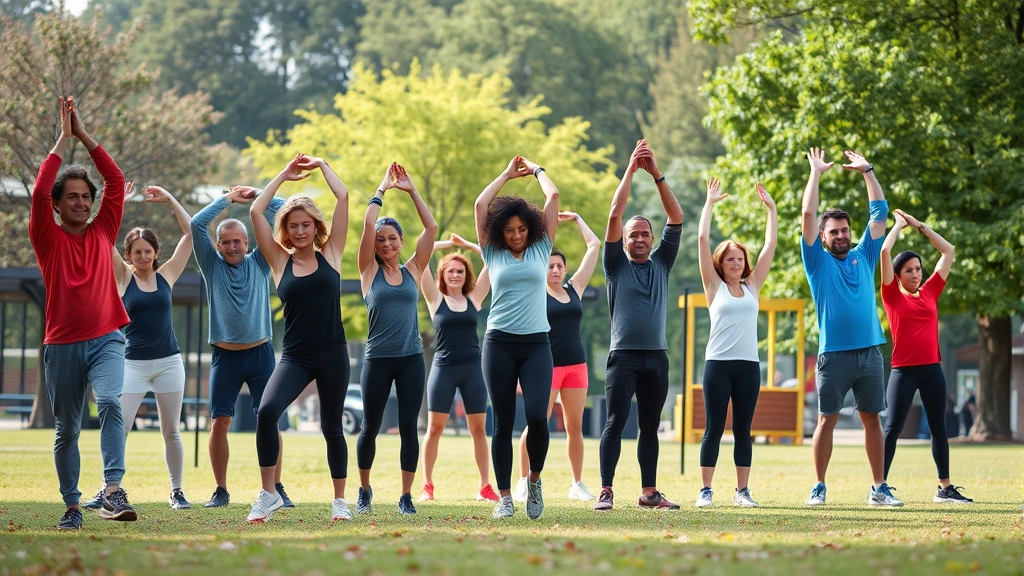
Fitness is a lifelong practice, not a destination. You’re not trying to reach some perfect endpoint where you never have to think about it again. You’re building a sustainable relationship with movement and health that evolves as your life evolves. That’s actually the coolest part.
” alt=”Group of diverse people stretching together outdoors after a workout session”/>
FAQ
How long does it take to see fitness results?
You’ll feel results (more energy, better sleep, improved mood) within 2-3 weeks. You’ll see physical changes (strength gains, endurance improvements) within 4-6 weeks if you’re consistent. Visible body composition changes typically take 8-12 weeks, but this varies based on genetics, starting point, and how dialed in your nutrition is. Patience and consistency matter more than quick fixes.
Should I do cardio or strength training?
Ideally, both. Strength training builds muscle, improves metabolism, and strengthens bones. Cardio improves heart health, builds endurance, and supports overall fitness. A balanced approach includes both, but if you have to choose, strength training gives you more bang for your buck in terms of long-term health and body composition. The best approach combines them based on your goals.
What if I don’t have time to work out?
Short workouts count. A 15-minute workout is better than nothing. A 20-minute strength session or a 30-minute walk is legitimate exercise. You don’t need an hour at the gym to see results. Consistency with shorter workouts beats sporadic long workouts every time. Work with your actual schedule, not an imaginary one.
Is it ever too late to start fitness?
No. Fitness benefits people at every age and fitness level. If you’re older, starting slowly and getting clearance from your doctor is smart, but you can absolutely build strength, endurance, and health at any age. The best time to start is now, wherever you are in your life.
How do I stay motivated when progress slows?
Shift your focus from outcome to process. Instead of “I want to lose 20 pounds,” focus on “I’m going to work out three times this week.” Celebrate consistency, not just results. Track non-scale victories. Remember why you started. Find community and support. And remember that plateaus are temporary and normal—they’re not failure.


