
Building Sustainable Fitness Habits: Your Real-World Guide to Lasting Change
Let’s be honest—you’ve probably started a fitness routine before. Maybe you crushed it for three weeks, felt amazing, and then… life happened. Work got busy, motivation fizzled, or you realized you were doing exercises you actually hated. That’s not a failure. That’s just being human. The difference between people who transform their fitness and those who don’t isn’t willpower or genetics—it’s understanding how to build habits that actually stick because they fit your life, not some influencer’s life.
I’ve watched countless people succeed not because they found the “perfect” workout, but because they found what worked for them and built systems around it. That’s what we’re talking about today. Not motivation (that’s overrated anyway), but the practical, science-backed strategies that turn fitness from something you “should” do into something you actually want to do.
Why Habits Matter More Than Motivation
Here’s something nobody wants to hear: motivation is unreliable. It’s that rush you get on January 1st or after watching a fitness transformation video. It feels amazing, but it doesn’t last. By February, when the novelty wears off and you’re facing a brutal 6 a.m. workout in the cold, motivation has ghosted you.
Habits, though? Habits are different. A habit is what you do when motivation isn’t around. It’s the automated behavior that requires minimal decision-making. When you’ve truly built a habit, you don’t wake up and think, “Should I work out today?” You just… do it. It’s as automatic as brushing your teeth.
Research from the Journal of Behavioral Medicine shows that habit-based approaches to fitness lead to significantly better long-term adherence than motivation-based approaches. When you rely on habits, you’re working with your brain’s natural tendency to automate repeated behaviors—not against it.
The best part? Once a habit is established, it requires less mental energy. You’re not white-knuckling through workouts. You’re just living your life, and fitness is part of that life.
Understanding the Habit Loop
Every habit has the same basic structure: cue, routine, reward. Understanding this loop is like having the cheat code to behavior change.
The Cue is the trigger. It might be your alarm going off, finishing breakfast, arriving home from work, or laying out your gym clothes the night before. The most successful people make their cues obvious and unavoidable.
The Routine is the actual behavior—your workout, your stretching, your walk. This is where most people focus, but here’s the thing: if your routine is miserable, no habit will save you. You need to choose activities you don’t dread. And yes, that might mean your ideal routine looks different from someone else’s, and that’s completely okay.
The Reward is what your brain gets out of it. This isn’t just about how you feel after—though that matters. It’s about immediate, tangible rewards. Maybe it’s a really good coffee after your workout, checking it off a tracker, texting a friend, or just the satisfaction of getting it done before the day chaos starts. Your brain needs to feel rewarded for repeating the behavior.
When you’re building a new fitness habit, focus on making the cue obvious, the routine simple enough that you’ll actually do it, and the reward immediate and satisfying. That’s how you build something that lasts.
Building Your Fitness Foundation
Before you’re doing advanced training techniques or pushing for personal records, you need a solid foundation. This isn’t boring—it’s actually freeing because it takes the guesswork out of what to do.
A strong foundation includes:
- Consistent movement: You don’t need fancy equipment or a gym membership. Walking, bodyweight exercises, or home workouts work perfectly. The goal is showing up regularly enough that it becomes automatic.
- Basic strength work: You should be able to do fundamental movements with control—squats, hinges, pushes, and pulls. Check out our guide on strength training fundamentals to dial in your form.
- Mobility and flexibility: This isn’t just yoga (though yoga is great). It’s maintaining a functional range of motion so you can move well in daily life and prevent injury.
- Proper recovery: Sleep, nutrition, and rest days aren’t optional add-ons. They’re foundational.
When your foundation is solid, everything else you build on top of it is more effective. You’re not trying to do advanced programming when you can’t nail the basics. That’s like trying to run before you can walk—technically possible, but you’re probably going to face unnecessary setbacks.
According to the American College of Sports Medicine (ACSM), establishing foundational fitness before pursuing specialized training reduces injury risk and improves long-term adherence. This is especially important if you’re returning to fitness after time off or starting for the first time.

Progressive Overload Without Burnout
Progressive overload is the principle of gradually increasing the demands on your body. Without it, you plateau. With too much of it too fast, you burn out or get injured. The sweet spot is small, consistent increases.
This doesn’t mean you need to be setting personal records every week. Progressive overload can look like:
- Adding one more rep to your last set
- Reducing rest time between sets by 15 seconds
- Increasing weight by the smallest increment available
- Improving range of motion or form on an exercise
- Adding one extra set per week
- Doing the same workout slightly faster
The key is that you’re progressing, but you’re doing it sustainably. If you’re constantly smashed and exhausted, you’re overdoing it. Real progress happens when you can recover between sessions. That’s when your body actually adapts and gets stronger.
When you’re thinking about how to structure your training week, progressive overload should inform your decisions, but it shouldn’t drive you into the ground. The best program you’ll stick with beats the perfect program you’ll quit.
Recovery and Balance Are Non-Negotiable
This is where a lot of people mess up. They think fitness happens in the gym. Actually, fitness happens during recovery. That’s when your muscles repair, your nervous system restores, and your body adapts to the stress you’ve put it under.
Recovery includes:
- Sleep: This is non-negotiable. Aim for 7-9 hours. Without adequate sleep, your hormones go haywire, your recovery tanks, and your motivation disappears. Not because you’re weak—because your body literally can’t perform well.
- Nutrition: You need enough protein, carbs, and healthy fats to fuel workouts and recovery. Check out our resource on nutrition for fitness goals to dial this in for your specific needs.
- Active recovery: Light movement on rest days—walking, stretching, easy yoga—improves blood flow and recovery without adding stress.
- Stress management: Chronic stress elevates cortisol and interferes with recovery. Whether that’s meditation, time outside, or just doing something you enjoy, managing stress is part of your training program.
Balance also means not doing the same thing every single day. Your body needs variation. If you’re lifting heavy, you need easier days. If you’re doing high-intensity interval training, you need low-intensity work. If you’re training hard, you need actual rest days where you’re not exercising.
The Mayo Clinic recommends that most adults get at least 150 minutes of moderate aerobic activity and strength training at least twice per week, with adequate recovery between sessions. Notice they’re not saying “train hard every single day.” They’re saying quality and recovery matter.
Real Strategies for Consistency
Knowing what to do and actually doing it are two different things. Here are the strategies that actually work:
Stack your habit onto something you already do. If you always have coffee in the morning, do five minutes of stretching while your coffee brews. If you always walk to your car after work, add a 10-minute walk first. You’re not creating a new time block—you’re attaching your new habit to an existing routine.
Make it stupidly easy to start. You don’t need to commit to an hour at the gym. Commit to putting on your workout clothes. Commit to five minutes. Once you start, you usually keep going. But the barrier to entry needs to be low. When you’re starting a new fitness routine, “easy” beats “optimal” every single time.
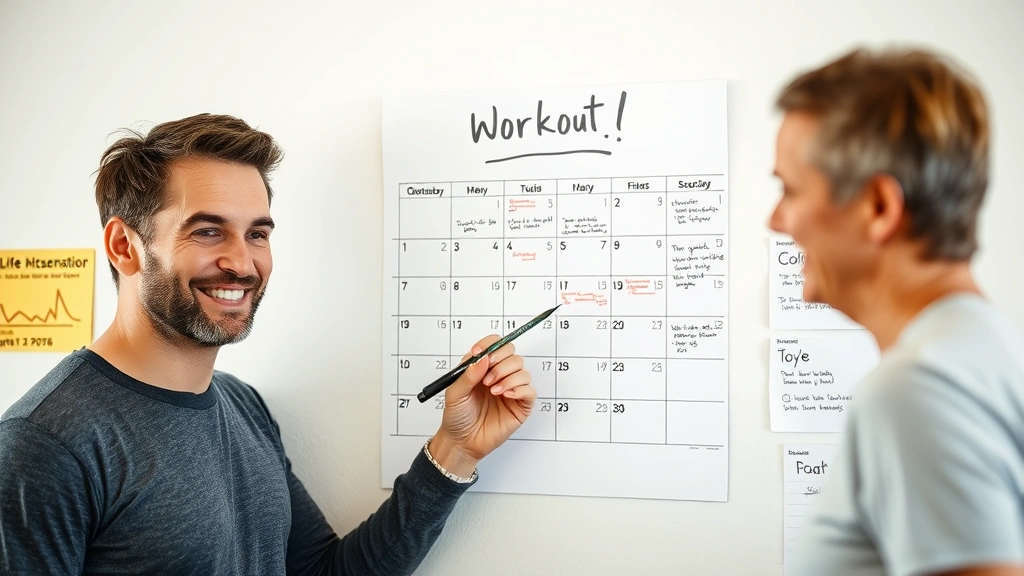
Track it visually. Whether that’s a calendar where you mark off days, a simple spreadsheet, or a fitness app, seeing your consistency builds momentum. Your brain likes seeing progress.
Find your people. This could be a gym buddy, a class, an online community, or a coach. Having someone who’s expecting you or who you’re accountable to makes you way more likely to show up. And it doesn’t have to be complicated—even a group chat where you share what you did that day works.
Plan for obstacles. You’ll have days when you don’t want to work out. You’ll have weeks where life is chaotic. Instead of hoping motivation carries you through, plan for it. “If I can’t make it to the gym, I’ll do a home workout.” “If I’m traveling, I’ll do bodyweight exercises in my hotel room.” Having a backup plan means you don’t go from “one missed workout” to “I’ve quit.”
Celebrate the small wins. You don’t need to wait until you’ve lost 20 pounds or hit a new personal record. Did you work out when you didn’t feel like it? That’s a win. Did you get eight hours of sleep? Win. Did you choose the stairs? Win. These small wins compound into real transformation.
FAQ
How long does it take to build a fitness habit?
The research varies, but most studies suggest 66 days on average for a behavior to become automatic. That said, some habits form faster, some slower. The first two weeks are usually the hardest because the behavior isn’t automatic yet. Push through that, and it gets significantly easier. The key is consistency—daily or near-daily repetition speeds up habit formation.
What if I hate my current workout?
Stop doing it. Seriously. The best workout is the one you’ll actually do. If you hate running, don’t run. If you hate the gym, try home workouts or classes. If you hate morning workouts, do evening workouts. Fitness is a long game. You’re not going to stick with something you dread, so why torture yourself? Find what you enjoy and build from there.
How do I stay consistent when motivation drops?
That’s exactly why habits matter more than motivation. When motivation drops—and it will—your habit carries you through. You’re not relying on feeling like it. You’re relying on the automatic behavior you’ve built. That’s why the first month is so important: you’re building the habit before you need it to carry you.
Do I need to work out every single day?
No. In fact, you probably shouldn’t. Your body needs recovery time. For most people, 3-5 days per week of structured training with rest days in between is ideal. Those rest days aren’t laziness—they’re when your body adapts and gets stronger. Check out our guide on workout frequency and recovery for more specifics based on your goals.
What about when life gets crazy?
Life will always get crazy. That’s not a reason to abandon fitness—it’s a reason to scale it. When you’re in a tough week, maybe it’s not a full workout. Maybe it’s a 15-minute walk or some bodyweight exercises. You’re maintaining the habit even if you’re not hitting your normal intensity. That’s how you don’t fall off completely when life happens.
How do I know if I’m overtraining?
Signs include persistent fatigue, decreased performance, elevated resting heart rate, irritability, and constant soreness. If you’re experiencing these, you need more recovery. This doesn’t mean you’re weak—it means you’re not recovering well enough for the training volume you’re doing. Scale back, sleep more, eat more, or reduce frequency. Listen to your body. It’s smarter than your ego.
Building sustainable fitness habits isn’t about finding the perfect program or pushing yourself to the limit. It’s about creating a system where fitness becomes part of your life because it’s actually enjoyable and sustainable. It’s about understanding that small, consistent actions compound over time into real transformation. Start with a solid foundation, build habits with obvious cues and immediate rewards, recover properly, and celebrate the progress you’re making. That’s how you go from “trying to get fit” to actually being fit—for real, for the long term. Your future self will thank you for starting now.


